The Thyssen Art Macabre
Saturday, October 24th, 2015
|
If there is one subject within this series of academic treatises on the Thyssens’ companies, politics, personal wealth, public relations and art collection(s), where sensitivity and openness would have been essential, it is this particular one, as the appalling conditions under which foreigners (Soviet nationals, French, Dutch, Belgians, etc.) were forced to work in Thyssen industries during WWII, and in the manufacture of arms and ordnance particularly, reflect so clearly the inhuman excesses of Nazism. In view of its importance we make no apology for the length of this review.
30 years after Ulrich Herbert’s ground-breaking work on forced labour and seven years after the publication of our book, the Thyssen family has until now remained one of only a few adamantly refusing to address this part of their history. Instead, it has always claimed to have remained largely uninvolved in the manufacture of arms and ordnance and the use of forced labour. It has also claimed not to have supported Hitler or to have stopped supporting him at some point. It has even gone as far as putting itself on one level with the victims of the regime, by saying that it too had been persecuted and expropriated.
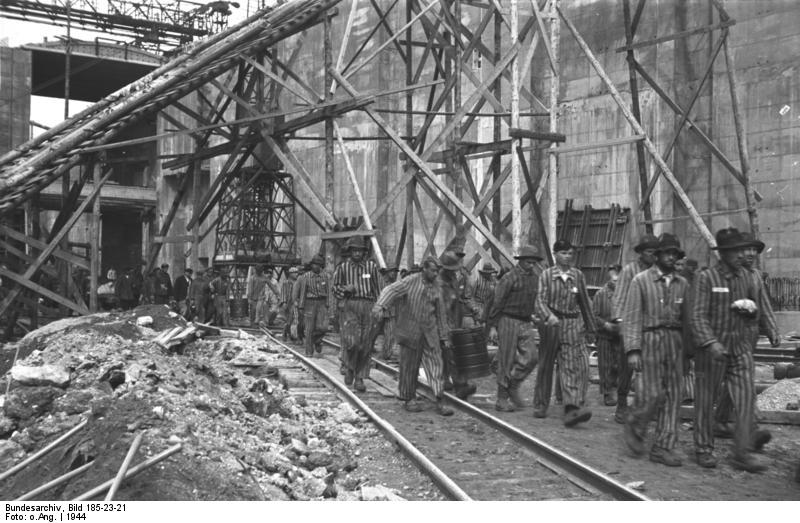
Additionally, the Thyssen-Bornemisza branch of the family claimed to be Hungarian and thus have nothing whatsoever to do with Germany. But those were all fake claims designed simply to divert attention away from the facts. And macabrely it was this „cosmopolitan“ side of the dynasty which was particularly supportive of the Nazis, through finance and banking, the construction of submarines and V-rocket-parts and a personal relationship with the SS and high-ranking Nazis. Over 1,000 concentration camp prisoners died in Bremen, building the „Valentin“ bunker where Heinrich Thyssen-Bornemisza’s Bremer Vulkan shipyard was planning to increase production to 14 submarines per month to secure a desperate final German victory in view of Hitler’s looming defeat.
In view of their overarching industrial and financial power and privilege, Fritz Thyssen and Heinrich Thyssen-Bornemisza had an overwhelming responsibility to behave with due respect towards their fellow men. In this we believe they failed as a result of their relentless greed, financial opportunism and amoral arrogance. Of all the Thyssen heirs, only one, GEORG THYSSEN-BORNEMISZA, is now seemingly agreeing to admit responsibility by supporting this project. But these flimsy 170 pages with their incomplete index (only personal, not corporate, which makes it so difficult to examine and analyse) only go a small way in rectifying the official record, and do not meet the standards of an international perspective.
Thomas Urban refuses to accept the legitimacy of our book and still sees fit to state that until the beginning of the 21st century forced labour within the Thyssen history remained „unnoticed“. In reality the subject appears to have been hidden intentionally, as far as possible, in order to fend off unwelcome publicity and possible compensation claims alike. It is also why the Thyssen-Bornemisza side of the family was hidden from academic research (the extent of which Dr Urban describes as „surprising“), until the publication of our book in 2007.
When Michael Kanther wrote on forced labour specifically for August Thyssen Hütte in 1991 it seems he could not publish until 2004, and then for the series “Duisburger Forschungen”. And ten years later, of the great plethora of Thyssen enterprises, only a handful are now admitted to have been guilty, namely the shipyards Bremer Vulkan and Flensburger Schiffsbau-Gesellschaft, the Walsum coal mine and the August Thyssen Hütte smelting works.
Press- and Rolling Works Reisholz and Oberbilker Steelworks are mentioned only furtively but not their involvement in the building of V-rockets or any co-operation with MABAG (Maschinen- und Apparatebau AG) of Nordhausen, where Heinrich’s son Stephan Thyssen-Bornemisza worked with the SS and some 20,000 concentration camp victims died. It is noteworthy, however, that the technical director of Press- and Rolling Works Reisholz, Wilhelm Martin, is said to have installed, „in his function as counter-intelligence commissioner“, a „political combat patrol“ out of Thyssen staff, which „in case of unrest amongst the staff was to be put into action using so-called manslayers“ – apparently its only known occurence in the whole of the Nazi armament economy – which is an astonishing admission to make.
As German workers were sent off to be soldiers, they were replaced by a total of 14 million foreign workers, including women and children, over the period of the war, and, at Thyssen enterprises, these worked at ratios of between one and an astonishing two thirds (at Walsum mine, as we first reported) of total staff. According to the size of the Thyssen enterprises, in all anything up to several tens of thousands of forced labourers would have been working there, yet Dr Urban does not even attempt to put a total figure on it. Instead, the pathetic blame game to the detriment of Krupp continues to the point where the description „forced labour“, as used continuously in this book, suddenly turns into „slave labour“ as soon as the name Krupp is mentioned. Meanwhile, the fact that at Thyssen in Hamborn they are now said to have produced much bigger quantities of grenade steel than at the Krupp works in Rheinhausen is lost in the small print.
At August Thyssen Hütte and the Mülheim Thyssen works, belonging more to the Fritz Thyssen sphere of influence, whose power was not as obliterated by his privileged wartime captivity as these official Thyssen publications still want to have us believe, a „high mortality“ amongst Soviet POWs is said to have existed. But actual figures do not go beyond eight or less deceased in each of a few events described by Dr Urban.
Because of race ideology, apart from concentration camp prisoners, Soviet POWs were treated worst, even to the point where, in view of the high risk of sabotage, according to Dr Urban, Heinrich Thyssen-Bornemisza’s Bremer Vulkan shipyard kept them at first in a barbed wire cage where others looked upon them „as on apes in a zoo“. (This information came from a 1980 Bremen school project and was acquired by Dr Urban from Dr Rolf Keller of the Lower Saxony Memorial Sites Foundation in Celle). Yet despite such disturbing manifestations of racist extremism, acts of humanity by the local population towards prisoners had taken place, as our editor Ulli Langenbrinck at Asso Verlag Oberhausen told us many years ago, for the simple reason that they had to work together under dangerous circumstances (in mines and on blast furnaces for instance) and therefore it was better to be considerate towards men on whom your life may depend.
Sadly, Thomas Urban has the nerve to suggest such recollections could be mere reflections of post-dated convenience and one wonders whether he has ever stopped to imagine what it would have been like to work under such conditions of racial, ideological and national discrimination, aggravating the already challenging tasks. Conditions that were in place because of the directives of megalomaniac politicians and equally megalomaniac industrialists, and yet which the people on the ground could plainly see were self-defeating. Surely it did not take the sight of actual concentration camp prisoners to get demoralised, as Dr Urban says was suggested at the time, and of which he argues only 75 are certified to have worked at Bremer Vulkan proper (this being a more palatable figure than the 1,000 fatalities mentioned above). The alienation of having to speculate about the fate of your own members of the „masterrace“ fighting in a distant land while the „subhuman“ enemies produced their weapons and amunition back home would have been an insane situation that was quite demoralising enough – and for both sides!
At the other end of the scale, the Thyssens, who in the past have been very „economical“ with their historic record, are getting nothing short of kid glove treatment, revealing a continued mentality of sympathy and subservience that goes beyond anything to be expected from a so-called independent academic commission. Even a reviewer from Duisburg-Essen University, Jana Scholz, seems to question why the right thing has not been done, namely to lay the responsibility solidly at the Thyssens’ feet. Instead, camp guards, foremen and managers are being blamed for the use and treatment of forced labourers, men such as Wilhelm Roelen or Robert Kabelac, and one wonders what their families must think of it. Particularly in the case of Roelen, since a movement has gathered against his memory in the Ruhr, after it was established that over 100 Soviet POWs died under his watch at Heinrich Thyssen-Bornemisza’s Walsum coal mine. Significantly, none of the managers’ families have been interviewed. And neither has anyone from the Thyssen family.
In another review Jens Thiel, who as an expert in medical ethics should know better, in all seriousness wonders whether it is still worth trying to „gain academic merits“ through working on the subject of forced labour. He goes on to praise the „sober“ descriptions in this book. But what is sober about the image of starving Russians eating raw fish killed by bombs, after diving into the ice-cold river in the middle of winter to retrieve them, eludes us. Or about that of locals remembering seeing, as children, hand-carts being driven out of Thyssen works with arms and legs hanging out by the sides, so that they were left obsessing whether the people contained therein were alive or dead.
Or that of gallows being erected at the Thyssen works „Zehntweglager“ camp in Mülheim (ruled over by a particularly sadistic father and son team of commanders) and adolescent Soviets being hanged there for theft „in the presence of a Gestapo man and an SS-non commissioned officer“ in apocalyptic scenarios – again witnessed by local children. All three descriptions being derived from personal interviews Dr Urban has carried out with eye witnesses and which are one of the few saving graces of this book. The book also describes other victims at Thyssen works being shot dead, including women, for instance for stealing foodstuffs.
Although the book does not dwell on this, there can be no doubt that Fritz Thyssen and Heinrich Thyssen-Bornemisza lived lives of privilege on the prodigious fruits of their father’s demented genius. They were both harking back to a world-view which was that of themselves as feudal overlords ruling over their personal fiefdoms. They were determined to oppose workers rights decisively (be they foreign or german) and that is why they supported fascism, including Admiral Horthy’s rule in Hungary. It is also why they financed their SS-occupied castle Rechnitz in Burgenland where Heinrich’s daughter Margit Batthyany led her own private wartime terror regime and participated in an atrocity on over 180 Jewish forced labourers in March 1945, which to this day remains unmentioned in any official Thyssen publication.
The Thyssen managers passed down this autocratic rule as they faced the simultaneous war-time challenges of meeting essential victory targets and delivering owners’ profits. They directed the saying „if you don’t do as you are told, Farge (a local Bremen work education camp) is nearby“ at german workers as well as foreign labourers. But the latter were always much more disadvantaged because the Nazis implemented the Führer principle throughout, turning any German into the boss of any foreign co-worker. Also, foreigners had to do heavier, more dangerous work and received worse rations and accommodation and insufficient air raid shelters. At a big air raid on the Hamborn Thyssen works on 22.01.1945, of the 145 dead 115 were POWs. In the case of foreigners camps at the Thyssen-Bornemisza mine at Walsum, a visiting state doctor and a Nazi party leader in 1942 were so horrified at the unbearable hygienic conditions that they ordered the Thyssen management to take immediate remedial action.
The profitability of the Thyssens’ war-time production, and ship building in particular, is mentioned but Thomas Urban says that verifiable figures are „not available“. But some of these figures are contained for instance in the minutes of the board meetings held quarterly in Flims, Davos, Lugano and Zurich (not just „Switzerland“ – in other words Heinrich was not too ill to travel around, he just did not want to leave Switzerland once war had started; simply for reasons of comfort rather than being “anti-Nazi”) with four participants (Baron Heinrich, Wilhelm Roelen, Heini Thyssen and Heinrich Lübke, Director of the August Thyssen Bank in Berlin – the two latter being played down by Urban). And the minutes were not taken by some anonymous „private secretary“ but in all probability by Wilhelm Roelen, which explains why copies are both in the corporate and private archives. We feel sure that the ThyssenKrupp Archives, respectively those of the Thyssen Industrial History Foundation, contain further relevant information about profitability – for instance in the files of the estate of Dr Wilhelm Roelen – but which for some reason are not being released.
It is also said in this book that no Thyssen enterprise during the Nazi period took over an „aryanised“ Jewish enterprise. But in reality Heinrich’s horse-racing stable Erlenhof near Bad Homburg had been bought for him in November 1933 by his entity Hollandsch Trust Kantoor from the estate of Moritz James Oppenheimer, a Jew who had been forced into liquidation and was later murdered – a very inconvenient date, when the official line has been and still is to say that Heinrich lived in Switzerland from 1932 onwards, i.e. from before Hitler’s assumption of power.
The author tries to make a point in Heinrich Thyssen-Bornemisza’s defence saying he did not take part in events at his works where Nazi party officials were present. But while Heinrich might not have left Switzerland after 1938 (he died there in 1947), his son Heini admitted to us that he returned to Germany in the middle of the war in 1942, when he travelled to Landsberg Castle for his grandfather’s 100th birthday celebrations, at which Nazi functionaries also took part (photographs of the event exist). After which he was allowed to travel back to Switzerland completely unhindered. But this remains unmentioned here, presumably in an attempt to minimise the record of Heini Thyssen’s war-time corporate embroilment.
Meanwhile, Thomas Urban has the audacity to allege that it is „not very likely“ (not exactly an academic approach!) that Heinrich’s contact with Hermann Göring went any further than their common interest in horse racing and that his distance from the regime was „likely not to have been only geographical.“ Instead Heinrich is praised for being able to „direct his companies from Switzerland“ as if, in this particular context, that was something to be admired. For such a crucial point, Dr Urban’s haphazard assessment of the Thyssen-Göring relationship is in fact an obscene remark to be made by this German academic and deeply offensive to the memory of the victims and to all people dedicated to the establishment of historical truth.
The banking contacts between the two men personally and with the regime in general via Heinrich’s August Thyssen Bank in Berlin (which was subsequently incorporated into BHF-Bank), his Union Banking Corporation in New York, his Bank voor Handel en Scheepvaart in Rotterdam and others have remained unmentioned so far in this series. We presume they are to be included in Simone Derix’ book on the family’s wealth and identity, due out in 2016, or in Harald Wixforth’s tome on the Thyssen-Bornemisza Group (publication date unknown).
It might be said to be understandable that the Thyssens would have denied their links with Nazi leaders in the past and also that their war-time managers would have argued thus in order to circumvent post-war allied retribution. But it is unforgivable that an academic project in 2014 continues in the same vein of skimming over the most crucial parts of the Aufarbeitung of the Thyssen history. And it is also unclear why Dr Urban has to remain so hazy about important issues such as the remuneration of forced labourers. While he mentions it, he does not give any details about it whatsoever, which is unforgivable.
Time and time again Dr Urban mentions problems with source materials and a deriving impossibility to treat the subject with the necessary substance and certainty. His statement „quite a high proportion of forced labour“ in the Thyssens’ building material enterprises around Berlin „can be assumed“ is unacceptable, because the archives in question are said to be „still being put together“, which, 70 years after the end of the war seems an incredible statement to make, even if it is one we have heard many times before during our research into the Thyssen history.
When Bremer Vulkan went bankrupt in the late 1990s neither the Thyssen Bornemisza Group nor ThyssenKrupp felt it necessary to take on its archives. Instead, these were left to a „friends’ association“ („Wir Vulkanesen e.V.“) which managed to destroy crucial files, including wartime staff records and thus documents concerning forced labour, under „data protection considerations“. Only after that purge did the files reach their current location at the Bremen State Archives. And at Flensburger Schiffsbaugesellschaft, according to management, „all files which were not subject to prescribed storage periods were completely destroyed“. The archives of the Walsum mine are also said to be „extremely incomplete“, which considering what a fastidious technocrat its head Wilhelm Roelen was, is either unlikely, due to wartime damage, or indicative of a wilful destruction of incriminating evidence.
And so it has remained to individual slave labourers themselves, who have had the courage to come forward with their own real-life stories (and which have been picked up by various German historians and local – sometimes even school – historical projects securing evidence, who have acted truly independently from any Thyssen entity) to paint the most truthful pictures of forced labour at Thyssen.
When the Dutchman Klaas Touber in 1988 wrote to Bremer Vulkan (whose honorary chairman was Heini Thyssen) to ask for a compensation of 3,000 Deutschmarks for his forced work effort during WWII, he was rejected and told the company „could not discover any concrete facts (…) that justify an obligation for us to provide compensation“. He was informed the company was bankrupt and if they paid him anything it would set a precedent and „all the other people who experienced the same thing at the time“ would want paying also and Bremer Vulkan „would not be able to do so“. This at a time when Heini Thyssen was putting his art collection up for sale, suggesting it might be worth up to two billion dollars. Klaas Touber, who weighed only 40 kg at one point while at Bremer Vulkan, had retained a life-long psychological trauma from his detention, particularly as a compatriot, who had come to his defence during a canteen brawl, had been killed at the Neugamme concentration camp. (Evidence sourced by Dr Urban partly from Dr Marcus Meyer, head of the Memorial Institution „Valentin“ Bunker of the Bremen Regional Centre for Political – the late Klaas Touber had been very involved in remembrance and reconciliation – and partly from a publication by the State Organisation of the Association of People Persecuted by the Nazi Regime / Bremen Association of Anti-Fascists e.V.).
Perhaps the most devastating and simultaneously most spirited story is that of Wassilij Bojkatschow. When he was 12 years old his village in Bielorussia had been taken by the Germans and both his father and grandfather killed. At the Thyssen works of Deutsche Röhrenwerke AG he was used for the most dangerous job, that of defusing unexploded bombs. In 1995 he wrote his memoirs and in 1996 travelled to Mülheim and met with the mayor and local people who had collected money for his and his wife’s visit. He described many traumatic experiences but also remembered „many examples of human feeling and kindness“ from German co-workers and locals. As it seems, he did not even ask for any monetary compensation. (Evidence sourced by Dr Urban from the annual report of the town of Mülheim).
In 2000 a Ucranian woman, Jewdokija Sch., wrote in a letter to the Bremen State Archive: „The work (at Bremer Vulkan) was very very hard. I worked as a welder, 12 hours a day, in wooden shoes, totally exhausted from hunger! In 1944 already I looked like a ghost“.
After its merger, ThyssenKrupp AG joined the German Industry Foundation Initiative in 2000 which was funded to pay compensation to former forced labourers. Related files are said to be closed to academic research for another 30 years, according to Dr Urban. What he does not mention is that it is unknown whether the Thyssen Bornemisza Group has ever contributed to any compensation payments.
Poignantly, the next volume in the series is about the Thyssens’ art collection(s), which was the primary tool used by the family to launder their sense of guilt and hide their incriminatory wartime record behind a veneer of cultured so-called „philanthropy“. Something that worked supremely well in the affluent years of the German economic miracle and beyond, when the art market sky-rocketed from one price hyperbole to the next, and the shine of the glamorous art world seemed to wipe away any concern about or even memory of the source of the Thyssen fortune. |
|
 Dr Thomas Urban, another Thyssen-funded academic, this time from the Ruhr-University in Bochum |
Tags: academic merits, Admiral Horthy, air raid, air raid shelter, art collection, art market, art world, aryanised Jewish enterprise, Asso Verlag, Association of Anti-Fascists, Association of People Persecuted by the Nazi Regime, atrocity, August Thyssen Bank, August Thyssen Hütte, Bad Homburg, Bank voor Handel en Scheepvaart, banking, banking contacts, Baron Concern, Berlin, BHF-Bank, Bielorussia, blast furnaces, Bremen, Bremen Regional Centre for Political Education, Bremen State Archives, Burgenland, compensation, concentration camp prisoners, counter-intelligence, data protection, Davos, Deutsche Röhrenwerke AG, discrimination, Dr Marcus Meyer, Dr Rolf Keller, Duisburg-Essen University, Duisburger Forschungen, Erlenhof, Farge, fascism, Flensburger Schiffsbau-Gesellschaft, Flims, Forced Labour, foreigners camps, Fritz Thyssen, Führer principle, Georg Thyssen-Bornemisza, German economic miracle, German Industry Foundation Initiative, Gestapo, guilt, Hamborn Thyssen Works, Harald Wixforth, Heini Thyssen, Heinrich Lübke, Heinrich Thyssen-Bornemisza, Hermann Göring, historical truth, Hitler's assumption of power, Hollandsch Trust Kantoor, horse racing, Hungary, hygienic conditions, Jana Scholz, Jens Thiel, Klaas Touber, Krupp, Landsberg Castle, liquidation, Lower Saxony Memorial Sites Foundation, Lugano, MABAG, manslayers, manufacture of arms and ordnance, Margit Batthyany, Maschinen- und Apparatebau AG, medical ethics, Memorial Institution Valentin Bunker, Michael Kanther, Moritz James Oppenheimer, Mülheim Thyssen Works, Nazism, Neugamme concentration camp, Nordhausen, Oberbilker Steelworks, Oberhausen, philanthropy, political combat patrol, Press- and Rolling Works Reisholz, profitability, public relations, Rechnitz, Rheinhausen, Schöningh Verlag, ship building, Simone Derix, slave labour, Soviet POWs, SS, Stephan Thyssen-Bornemisza, submarines, Switzerland, Thomas Urban, Thyssen Bornemisza Group, Thyssen Family, Thyssen fortune, Thyssen history, Thyssen in the 20th century, Thyssen Industrial History Foundation, Thyssen managers, Thyssen-Göring relationship, ThyssenKrupp archives, Thyssens' building material enterprises, Ulli Langenbrinck, Ulrich Herbert, Union Banking Corporation, United Steelworks, V-rocket production, Valentin bunker, Walsum coal mine, wartime production, wartime staff records, Wilhelm Martin, Wir Vulkanesen e.V., work education camp, Zehntweglager, Zurich
Posted in The Thyssen Art Macabre, Thyssen Art, Thyssen Corporate, Thyssen Family Comments Off on Book Review: Thyssen in the 20th Century – Volume 2: “Forced Labour at Thyssen. United Steelworks and Baron-Concern during World War Two”, by Thomas Urban, published by Schöningh Verlag, Germany, 2014.
Sunday, October 18th, 2015
The second book in the series “Family – Enterprises – Public. Thyssen in the 20th Century”, written by Dr Thomas Urban and published by Schöningh Verlag in 2014, looks at the use of forced labour at the United Steelworks (Fritz Thyssen) and at the “Baron Concern” (Heinrich Thyssen-Bornemisza).
In it, we are described as “sensationalist journalists”.
It is reassuring to see that Professor Rasch and his academic colleagues continue to refer to the contents of our book, while confirming the accuracy of our work. Unfortunately, neither Manfred Rasch nor the other academics are showing any moral concern or regret, either personally or on behalf of the owner families, for the crime of working thousands of people to death (accurate records apparently no longer exist) in order to increase productivity and profitability, the responsibility for this being laid squarely at the feet of the war-time management.
I was recently reminded how the Thyssen family continue to reject their answerabilities when, in order to persuade me to stop writing about whether his family’s money smells, Lorne Thyssen (Baron Lorne Thyssen-Bornemisza) took me out to lunch, over which he said that his rejection of my accusation was based on the fact that he and his family had “not even been alive” at the time that their fortune was being forged.
He refused to accept my explanations or even show any regret that much of his father’s art collection, which had formed a major part of his inheritance, was funded with the profits made from such appalling activity. In my eyes, certainly morally and possibly legally, he and his relatives should acknowledge at least an appropriate degree of guilt.
I also told Lorne Thyssen that I considered his silence, like that of the rest of the family and now Professor Rasch and his team of academics, to be reflecting the same lack of concern that enabled the perpetration of the crime against humanity in the first place.
We remain proud of our book, its sources, accuracy and achievements, regardless of the label Manfred Rasch may see fit to give us and proud of the fact that the Thyssen family are now one step nearer to a full admission of their historic responsibility.
Das zweite Buch in der Reihe „Familie – Unternehmen – Öffentlichkeit. Thyssen im 20. Jahrhundert“, von Dr Thomas Urban, erschienen im Schöningh Verlag 2014, dreht sich um das Thema Zwangsarbeit beim „Stahlverein“ (Fritz Thyssen) und beim „Baron Konzern“ (Heinrich Thyssen-Bornemisza).
In dem Werk werden wir als „sensationsorientierte Journalisten“ bezeichnet.
Es ist ermutigend, dass Professor Rasch und seine akademischen Kollegen sich weiterhin auf den Inhalt unseres Buches beziehen und die Richtigkeit unserer Arbeit bestätigen. Aber weder Manfred Rasch noch die anderen Akademiker zeigen Betroffenheit oder Bedauern, entweder persönlich oder im Namen der Eigentümer-Familie, ob des Verbrechens, tausende von Menschen zu Tode zu arbeiten (genaue Aufzeichnungen existieren anscheinend nicht mehr), um Produktivität und Gewinn zu steigern. Diese Verantwortung wird entschieden den Managern zugeschoben.
Ich wurde vor Kurzem daran erinnert, dass die Thyssen Familie weiterhin ihre Verantwortlichkeit ablehnt, als mich Lorne Thyssen (Baron Lorne Thyssen-Bornemisza) zum Essen lud, um mich zu überreden, meine Schriften zur Frage, ob dem Geld seiner Familie ein übler Geruch anhaftet, einzustellen. Dabei meinte er, dass er meine Anschuldigungen zurückweisen müsse, da seine Familie „noch nicht einmal geboren war“ als ihr Vermögen geschmiedet wurde.
Er weigerte sich, meine Erläuterungen zu akzeptieren oder Bedenken zu zeigen, dass vieles am Wert der Kunstsammlung seines Vaters, welcher zum großen Teil in sein Erbe einfloß, mit den Profiten aus solch einer entsetzlichen Unternehmung finanziert wurde. In meinen Augen sollten er und seine Verwandten sicherlich moralisch, wenn nicht gar rechtlich ein angemessenes Ausmaß an Schuld anerkennen.
Ich sagte Lorne Thyssen auch, dass sein Schweigen, wie der des Rests der Familie und nun auch von Professor Rasch und seines akademischen Teams denselben Mangel an Anteilnahme widerspiegeln, welcher das ursprüngliche Verbrechen gegen die Menschlichkeit ermöglichte.
Wir bleiben stolz auf unser Buch, seine Quellen, seine Exaktheit und seinen Erfolg, ungeachtet des Aufklebers, den Professor Rasch versucht uns anzuhängen. Und wir sind stolz auf die Tatsache, dass die Thyssen Familie jetzt einen Schritt näher daran ist, ihre historische Verantwortung vollumpfänglich einzugestehen.
Tags: answerability, art collection, Baron Concern, Baron Konzern, Baron Lorne Thyssen-Bornemisza, crime against humanity, Erbe, Forced Labour, fortune, Fritz Thyssen, guilt, Heinrich Thyssen-Bornemisza, historic responsibility, historische Verantwortung, inheritance, Kunstsammlung, Lorne Thyssen, Manfred Rasch, Schöningh Verlag, Schuld, Stahlverein, Thomas Urban, Thyssen, Thyssen im 20. Jahrhundert, Thyssen in the 20th century, United Steelworks, Verbrechen gegen die Menschlichkeit, Vermögen, war-time management, Zwangsarbeit
Posted in The Thyssen Art Macabre, Thyssen Art, Thyssen Corporate, Thyssen Family Comments Off on Forced Labour at Thyssen: Is the “Baron Concern” the Baron’s Concern? – Zwangsarbeit bei Thyssen: Belangt der “Baron Konzern” den Baron etwas an?
Tuesday, September 22nd, 2015
|
Dieses Buch über das “Gemeinschaftsunternehmen zu dem Unternehmen der Thyssen-Gruppe zählten” beginnt mit der Aussage des Autors, es sei “erstaunlich, dass sich die moderne unternehmenshistorische Forschung noch nicht intensiver mit der Entwicklung des Konzerns in den Jahren 1933 bis 1945 auseinandergesetzt hat”. Offensichtlich wurde die in unserem Buch enthaltene, unabhängige wissenschaftliche Information nicht anerkannt, obwohl sie Auslöser dafür war, dass Dr. Donges und seine akademischen Kollegen mit dem Umschreiben der Thyssen Geschichte beauftragt und dafür gefördert wurden.
Erst in der Mitte des 400-Seiten schweren Traktats rückt er schließlich damit heraus, dass die Vereinigten Stahlwerke (VSt, Vestag) massiv im Rüstungsgeschäft tätig waren, aber dass “in der Forschung (dies) bislang nicht hinreichend beachtet (wurde), sodass die Vestag im Gegensatz zu Unternehmen wie dem Krupp-Konzern eher als Roheisen- und Rohstahlproduzent wahrgenommen wird”.
Die Entscheidung, wie man auf solche ganz offensichtlich manipulierten Behauptungen reagieren soll fällt schwer und wir fragen uns, ob es Dr Donges jemals in den Sinn gekommen ist, dass die Dimensionen der bisherigen fälschlichen Darstellung so bedeutsam sind, dass der Schluss auf der Hand liegt, dass sie nicht zufällig sondern absichtlich zustande kam.
Da die Thyssens zusammen mit dem Deutschen Staat zu Beginn von Hitler’s Diktatur 72,5% der Vereinigten Stahlwerke kontrollierten, und deren Ausstoß drei Mal so groß war wie der ihres größten Konkurrenten, war es stets unlogisch, dass Alfried Krupp im Nürnberger Prozeß zu einer Haftstrafe verurteilt wurde, während die Thyssens ungeschoren davon kamen. Sie konnten dies aus vielen verschiedenen Gründen, die in unserem Buch ausführlich beschrieben werden, und so wurde der Mythos ihrer heldenmütigen Unbeflecktheit erschaffen.
Es ist offensichtlich, dass die akademische und die Medienwelt in Deutschland willens waren, diesem Mythos zu folgen statt ihn zu hinterfragen, wie wir es getan haben. Zu ihrer Verteidigung mögen sie anführen, dass sie gewisse Dokumente nicht einsehen konnten und ihre Forschungen dadurch behindert waren. Doch während die Archive der Thyssen-Bornemiszas tatsächlich bis vor kurzem für die akademische Welt unzugänglich waren, bestand für die Akten des 53-Jahre alten ThyssenKrupp Archivs keinerlei Zugangsbeschränkung (offiziell jedenfalls nicht; die Wahrheit steht auf einem anderen Blatt).
Als Georg Thyssen-Bornemisza ca. 2006/7 die Stiftung zur Industriegeschichte Thyssen ins Leben rief und ihr die Archive seines Vaters übergab (welche wir zuvor privat in Madrid und später in Monte Carlo eingesehen hatten), unterstellte er diese der fragwürdigen Pflegschaft von Prof. Manfred Rasch, Leiter des Archivs der ThyssenKrupp AG und sogar, so scheint es, zur Aufbewahrung im selben Gebäude in Duisburg, welches das ThyssenKrupp Archiv enthält.
Dieser erstaunliche Transfer hatte zur Folge, dass die Akten der Familie Fritz Thyssen mit den Akten der Familie Heinrich Thyssen-Bornemisza symbolisch vereinigt wurden; ein unglaublicher Akt, wenn man bedenkt, wie wichtig es für die Aufrechterhaltung des geschichtlichen Thyssen-Mythos war, stets zu betonen, dass die eine Seite der Familie mit der anderen Seite nichts zu tun hatte – ein Mythos, den die drei ersten Bücher dieser Reihe nichtsdestotrotz weiter fortsetzen.
Bei näherer Einsicht der Bestände, jedoch, scheinen kuriose interne Restrukturierungen der Akten in den beiden Archiven vorzugehen. Da sind zum einen wichtige Akten, von denen wir wissen, dass sie vormals im ThyssenKrupp Archiv waren, wie z.B. (erstaunlicherweise) der Nachlass von Wilhelm Roelen (Hauptmanager von Heinrich Thyssen-Bornemisza) oder der Nachlass von Robert Ellscheid (Hauptanwalt von Fritz und Amélie Thyssen) und von denen jetzt behauptet wird, sie befänden sich im Archiv der neuen Stiftung zur Industriegeschichte Thyssen.
Was aber besonders aus den Fußnoten hervorsticht ist, dass immer und immer wieder wenn es speziell um militärische Rüstung geht, die Akten meist aus dem Archiv der neuen Stiftung zur Industriegeschichte Thyssen stammen sollen, und nicht aus dem der ThyssenKrupp AG, sodass man das Gefühl bekommt, hier könnte eventuell eine Schadensbegrenzung zugunsten des kränkelnden Riesen der deutschen Schwerindustrie im Gange sein.
Auf alle Fälle ist eines der wenigen, bedeutenden Eingeständnisse dieses Buches, dass die Flucht Fritz Thyssens von Deutschland in die Schweiz bei Ausbruch des Zweiten Weltkriegs weniger mit heroischer Auflehnung gegen Hitler, und mehr mit der Tatsache zu tun gehabt haben könnte, dass er massiv gegen Devisenbestimmungen verstoßen und Steuern hinterzogen hatte, von der wir zuerst berichteten (obschon es nichts über weitere Gründe für seine Flucht aussagt, wie zum Beispiel Hitlers erniedrigende Anschuldigung des Eigennutzes).
Während Dr Donges die Verfehlungen Fritz Thyssens in Zahlen festhält, nämlich 31 Millionen Reichsmark in hinterzogenen Steuern plus 17 Millionen RM Reichsfluchtsteuer, also ein Gesamtbetrag von 48 Million RM, der an den deutschen Staat zu zahlen gewesen wären, mildert er die Aussage ab, indem er behauptet, das Entnazifizierungsverfahren von 1948 sei nicht zu dem Schluss gekommen, dass dieser Aspekt eine wichtige Rolle bei Fritz Thyssens Flucht gespielt habe. Dr Donges unterlässt es jedoch, diesen Beweis zu qualifizieren – wie es andere Autoren in dieser Reihe tun – und darauf hinzuweisen, dass die ehrliche Aufarbeitung durch diese Gerichte zum Erliegen kam sobald der Kalte Krieg begann.
Es ist auch bemerkenswert, dass der Autor behauptet die kritische Steuerfahndung in Sachen Fritz Thyssen habe Ende der Zwanziger Jahre begonnen, obwohl diese in Wirklichkeit bereits bald nach dem Ersten Weltkrieg ihren Anfang nahm.
Das Buch bringt es fertig, zu veröffentlichen, dass die zurückgezogen lebende Joseph Thyssen Seite der Familie (vom Bruder des alten August Thyssens abstammend) indirekt von der Verfolgung von Juden profitierte, da das Reich ihnen nach Fritz Thyssens Flucht und der Beschlagnahmung seines Vermögens, den Wert ihrer VSt-Aktien, nämlich 54 Million RM, mit Aktien aus jüdischem Besitz erstattete, die durch die Judenvermögensabgabe an das Reich gekommen waren.
Aber es war Fritz Thyssen, dessen Anti-Semitismus offensichtlich war, während er in prominenter Position 1933/4 daran beteiligt war, die jüdischen Mitglieder Paul Silverberg, Jakob Goldschmidt, Kurt Martin Hirschland, Henry Nathan, Georg Solmssen und Ottmar E Strauss aus dem Aufsichtsrat der VSt zu drängen. Und ganz gleich wie oft man in dieser Serie versuchen wird, uns weiszumachen, dass Fritz Thyssen sich nach 1934 “selbst stufenweise ent-nazifierte” und dass seine Judenfeindlichkeit nicht von der bösartigen, mörderischen Art war, so müssen wir uns daran erinnern, dass die wirtschaftliche Entrechtung der Juden den ersten Schritt auf dem Weg zum Holocaust darstellt.
Als die Simon Hirschland Bank in Essen 1938 “arisiert” und von einem Konsortium übernommen wurde, an dem die Deutsche Bank und die Essener National-Bank AG beteiligt waren, kaufte Fritz Thyssen einen Anteil von 0.5 Millionen RM, aber seine Rolle wird als “fraglich” bezeichnet und gesagt, dass “in der Forschung nur ungenau beantwortet (wird) welche Rolle Thyssen bei der Gründung dieses ‘Arisierungs-Konsortiums’ spielte”. Dies ist eine Methode, mit der Akademiker Zweifel an etablierten Einschätzungen aussähen, vor allem wenn diese für die Thyssens rufschädigend sind und sie von ihnen beim Umschreiben ihrer Geschichte gefördert werden.
Natürlich bleibt die sehr wichtige Finanz- und Bankenseite der Fragestellung genauso unterbelichtet, wie sie es zur Zeit des Geschehens war. Dr Donges erwähnt anonyme Holdings in den Niederlanden, der Schweiz und in den USA; dass das Reich die Rüstungsfinanzierung über die Metallurgische Forschungsanstalt verschleierte; und Faminta AG im schweizerischen Glarus, von dem er behauptet, es sei ein ausländisches Instrument der Thyssen & Co., nicht von Fritz Thyssen persönlich, gewesen. Er nennt nicht die Namen der amerikanischen Anleihegläubiger und sagt aus, dass die Rolle des Finanzministeriums im Dritten Reich noch nicht ausreichend erforscht worden ist.
Und während Dr Donges auf Seite 28 in oberflächlichster Weise informiert, dass nach dem Tod des Patriarchen August Thyssen 1926, Fritz Thyssen seinem Bruder Heinrich “einen Teil” der VSt Aktien abtreten musste (es waren anfänglich nicht weniger als 55 Millionen RM, für die er im Gegenzug Anteile an der Familien-eigenen Bank voor Handel en Scheepvaart in Rotterdam erhielt, die von Heinrich Thyssen-Bornemisza kontrolliert wurde), beschreibt er nirgends, wie lange dieser Anteil wohl im Besitz von Heinrich Thyssen-Bornemisza verblieb und ob er sich noch in seinem Besitz befand, als das Vermögen von Fritz Thyssen 1939/40 konfisziert wurde (und falls ja, was dann damit geschah).
Statt dessen konzentriert sich der Autor auf die “Nutzung von politischen, rechtlichen und gesellschaftlichen Optionen für den wirtschaftlichen Erfolg” in der NS-Zeit. Er veranschaulicht “die unternehmerischen Vorteile des Ausbaus der Rüstungsbetriebe” und stellt fest: “Auch wenn die Handlungsspielräume im Vergleich mit der Weimarer Republik aufgrund zahlreicher Restriktionen eingeschränkt waren, konnte die Konzernleitung (der VSt) weiterhin eine langfristig ausgerichtete Investitionsstrategie verfolgen.”
Und so endet das Buch mit der weltbewegenden Schlussfolgerung: “Betrachtet man die Entwicklungslinien der deutschen Stahlindustrie im 20. Jahrhundert, so bewegten sich die Stahlerzeuger im langfristigen Trend hin zur Weiterverarbeitung. Daher wäre die Vestag (Vereinigte Stahlwerke AG) in den 1930er Jahren wohl auch unter einem anderen politischen Regime diesen Weg gegangen”.
So muss man annehmen, dass dies der Hauptgrund für dieses Werk war: das Image der ThyssenKrupp AG und das Gewissen überlebender Mitglieder der Thyssen-Familie, die von der Rolle der Vereinigten Stahlwerke AG beim Tod von 80 Millionen Menschen als Auswirkung des Zweiten Weltkriegs profitiert haben – und dies noch tun – sauber zu halten.
Es ist nicht ersichtlich, wie Dr Donges mit seiner Doktorarbeit tatsächlich die Forschungslücke zum Thema Vereinigte Stahlwerke in der Nazi-Periode auch nur annähernd “schließen” könnte, wie in der Missionsaussage zur Projektreihe “Familie – Unternehmen – Öffentlichkeit. Thyssen im 20. Jahrhundert” zu lesen steht.
Ob jemand ausserhalb des Zirkels der offensichtlich Thyssen-finanzierten Forscher in Folge dessen aus dem “großen, bedingungslosen Schlummer” erwachen und beschließen wird, eine etwas kritischere Forschung zu betreiben, wird sich zeigen. Akademische Buchrezensionen (z. B. von Tobias Birken bei Sehepunkte, oder Tim Schanetzky bei H-Soz-Kult) lassen bisher nicht viel Hoffnung auf eine wirklich kritische Auseinandersetzung aufkommen. In jedem Falle ist es eine ganz andere Frage, wie abweichende Akademiker empfangen würden, wenn sie an die Tür der “Archive des Professors Rasch” anklopften. |
|
 Der Volkswirt (Dr.) Alexander Donges, wie er seinen Titel an der Universität Mannheim als akademischer Thyssen-Söldner verdient |
Tags: abweichende Akademiker, Akademiker, Akademische Buchrezensionen, akademische Welt, Aktenbestände, Alexander Donges, Alfried Krupp, Amelie Thyssen, amerikanische Anleihegläubiger, anonyme Holdings, Anti-Semitismus, arisiert, Arisierungs-Konsortium, Aufsichtsrat, Bank voor Handel en Scheepvaart, Deutsche Bank, deutsche Stahlindustrie, Deutschland, Devisenbestimmungen, Diktatur, Doktorarbeit, Duisburg, Entnazifizierungsverfahren, Erster Weltkrieg, Essen, Essener National-Bank AG, Faminta AG, Finanzministerium im Dritten Reich, Flucht, Forschungslücke, Fritz Thyssen, Fritz Thyssens Flucht, Georg Solmssen, Georg Thyssen-Bornemisza, Gewissen, Glarus, H-Soz-Kult, Haftstrafe, Handlungsspielräume, Heinrich Thyssen-Bornemisza, Henry Nathan, hinterzogene Steuern, Hitler, Holocaust, Image, Investitionsstrategie, Jakob Goldschmidt, Judenfeindlichkeit, Judenvermögensabgabe, Kalter Krieg, Konsortium, Konzernpolitik, Krupp-Konzern, Kurt Martin Hirschland, Madrid, Manfred Rasch, Marktwirtschaft, Medienwelt, Metallurgische Forschungsanstalt, militärische Rüstung, Missionsaussage, Monte Carlo, Mythos, Nationalsozialismus, Niederlande, Nürnberger Prozess, Ottmar E Strauss, Paderborn, Paul Silverberg, Projektreihe, Reichsfluchtsteuer, Robert Ellscheid, Roheisen, Rohstahlproduzent, Rotterdam, Rüstungsfinanzierung, Rüstungsgeschäft, Schadensbegrenzung, Schöningh Verlag, Schweiz, Sehepunkte, Simon Hirschland Bank, Staatswirtschaft, Steuerfahndung, Stiftung zur Industriegeschichte Thyssen, Thyssen & Co, Thyssen im 20. Jahrhundert, Thyssen-Gruppe, Thyssen-Mythos, ThyssenKrupp AG, ThyssenKrupp Archiv, Tim Schanetzky, Tobias Birken, unternehmenshistorische Forschung, USA, Vereinigte Stahlwerke AG, Vereinigte Stahlwerke AG im Nationalsozialismus, Verfolgung der Juden, Vestag, VSt-Aktien, Weimarer Republik, Weiterverarbeitung, Wilhelm Roelen, wirtschaftliche Entrechtung der Juden, Zugangsbeschränkung, Zweiter Weltkrieg
Posted in The Thyssen Art Macabre, Thyssen Corporate, Thyssen Family Comments Off on Buchrezension: Thyssen im 20. Jahrhundert – Band 1: “Die Vereinigte Stahlwerke AG im Nationalsozialismus, Konzernpolitik zwischen Marktwirtschaft und Staatswirtschaft”, von Alexander Donges, erschienen im Schöningh Verlag, Paderborn, 2014.
Tuesday, September 22nd, 2015
|
This book begins with the author expressing his „astonishment“ at the fact that the entrepreneurial, Nazi period history of the United Steelworks (Vereinigte Stahlwerke, VSt) – a conglomerate which included Thyssen works – has not so far been properly researched by academia. Obviously, the independent scholarly information contained in our book has not been considered worthy of acknowledgment, regardless of the fact that it was as a direct result of its publication that Dr Donges and his fellow academic authors have been commissioned and funded to rewrite the Thyssens’ history.
Not until half way through the 400-page tome does he finally acknowledge that VSt was massively involved in armaments manufacture, but that, instead of perceiving this adequately, academia until now has rather viewed VSt as a mere raw iron and raw steel producer – in stark contrast to the Krupp-concern.
While it is difficult to know how to react to such obviously manipulated claims, this reviewer wonders whether it might ever occur to Dr Donges that the dimensions of previous mis-representations are such that it takes minimal intelligence to conclude that they must have been the result of intent rather than accident.
Considering that by the onset of Hitler’s dictatorship, the Thyssens, together with the German state, controlled 72,5% of VSt, and VSt’s output was three times the size of that of its biggest competitor, it was always illogical that Alfried Krupp was sentenced to prison at the Nuremberg Trials while the Thyssens got off scot-free. But for many and various reasons, explained at length in our book, they did, and there the myth of their quasi-heroic immaculacy began to be established.
It is apparent that German academia and the German media were prepared to follow this myth instead of, as we did, questioning it. In their defense they might argue that they were not able to view certain archives and that this has hampered their research. But while the Thyssen-Bornemiszas’ files have indeed been unavailable to academia until recently, for the past 53 years of their existence the ThyssenKrupp archives – officially at least (the truth is another matter) – have not been subject to such restrictions.
When at some point around 2006/7 Georg Thyssen-Bornemisza created the Thyssen Industrial History Foundation and placed in it his father’s archives (which we had previously viewed in private, first in Madrid and later in Monte Carlo), he effectively placed them under the questionable curatorship of Prof. Manfred Rasch, head archivist of ThyssenKrupp AG, and even, it seems, in the same building as the ThyssenKrupp archives in Duisburg.
This move did the extraordinary thing of symbolically uniting the files of Fritz Thyssen’s side with those of Heinrich Thyssen-Bornemisza’s side of the family; a momentous act, since it was a crucial element of the Thyssen historical myth that the two sides always pretended to have nothing to do with one another, a myth that the first three books in this series are nonetheless still trying to propagate.
Upon closer inspection of the contents lists, however, curious internal restructurings of files appear to be going on in these two archives. There are important files, which we know used to be in the archives of ThyssenKrupp, such as, surprisingly, the estate of Wilhelm Roelen (main war-time manager of Heinrich Thyssen-Bornemisza) or, unsurprisingly, the estate of Robert Ellscheid (main lawyer of Fritz and Amélie Thyssen), and which are now said to be in the new Thyssen Industrial History Foundation archives.
But what is most noticeable from the footnotes is that time and time again, when reference is made to armaments in particular, the files in question tend to allegedly have been sourced in the archives of the newly created Thyssen Industrial History Foundation, rather than the archives of ThyssenKrupp AG, giving the impression of a possible damage limitation aspect in respect of this already ailing giant of German heavy industry.
In any case, one of the few major admissions made in this book is that Fritz Thyssen’s flight from Germany to Switzerland at the onset of World War Two might have had less to do with heroic opposition to Adolf Hitler and more with the fact that he had contravened foreign exchange regulations and committed tax evasion on a massive scale, as we first revealed (though they say nothing of the other reasons for his flight, including Hitler’s humiliating accusations of self-interest).
While presenting the actual figures of Fritz Thyssen’s misdemeanours, namely 31 million Reichsmark in evaded tax plus 17 million Reichsmark Reich Flight Tax, equalling a total of 48 million RM payable to the German State, Dr Donges quickly attenuates the claim by explaining that the denazification board of 1948 did not come to the conclusion that this had played a role in Fritz Thyssen’s flight. But what he fails to mention – although another author in the same series of books does – is how any genuine Aufarbeitung by these courts stalled once the Cold War began.
It is also noticeable that the author alleges the critical tax investigation into Fritz Thyssen’s affairs to have begun in the late 1920s, when in actual fact it had started almost immediately after the end of World War One.
The book manages to reveal that the retiring Joseph Thyssen branch of the dynasty (deriving from the brother of old August Thyssen) indirectly profited from the persecution of the Jews, as the Reich paid out their 54 million RM shares in VSt after Fritz Thyssen’s flight and the confiscation of his assets, by handing them shares previously owned by Jews and taken from them as part of the Jewish Assets Levy (Judenvermögensabgabe).
But it was Fritz Thyssen, whose anti-semitism was most overt, as he was prominently involved in forcing the Jewish members Paul Silverberg, Jakob Goldschmidt, Kurt Martin Hirschland, Henry Nathan, Georg Solmssen and Ottmar E Strauss to vacate their seats on the supervisory board of VSt in 1933/4. And no matter how often in this series they will try to tell us that Fritz Thyssen “gradually denazified himself” starting in 1934 and that his anti-Semitism was not of the vicious, murderous kind, we need to remember that forcing Jews out of their jobs was the first step in their disenfranchisement and on the road to the Holocaust.
When the Simon Hirschland Bank in Essen was „aryanised“ in 1938 by a banking consortium including Deutsche Bank and Essener National-Bank AG, Fritz Thyssen bought a share of 0.5 million RM, yet his role is said to be „unclear“ and „explained unsatisfactorily by reseachers“, which is the academics’ way of sowing doubt over established facts, especially when these are detrimental to the Thyssens’ image, and especially when they have been funded by Thyssen institutions to rewrite their history.
Of course generally the all important finance and banking side of things remains as much in the dark as it was at the time in question. Dr Donges mentions anonymous holdings in Holland, Switzerland and the USA; the Reich’s camouflaging of armaments financing through Metallurgische Forschungsanstalt; and Faminta AG of Glarus, Switzerland, which he alleges to have been a foreign vessel for Thyssen & Co. rather than for Fritz Thyssen personally. He leaves US bond creditors unnamed and states that „the role of the Finance Ministry within the Third Reich has not been sufficiently studied yet“.
And while on page 28 Dr Donges admits, albeit in the most superficial of ways, that after the death of the patriarch August Thyssen in 1926, Fritz Thyssen had to relinquish “part of the VSt shares” to his brother Heinrich, he does not tell us how long this stock [not just a few shares, but an initial 55 million RM, no less, and for which Fritz received shares in the family’s Dutch bank Bank voor Handel en Scheepvaart in Rotterdam in return, which was controlled by Heinrich] might have remained under Heinrich Thyssen-Bornemisza’s ownership and whether any of it was still in his possession at the time of the confiscation of Fritz’s fortune in 1939/40 (and if so, what happened to it after this date).
Instead the author concentrates on looking at the „use of political, legal and social options to further economic success….during the Nazi period“. He concludes that „entrepreneurial advantages were to be gained from the development of the armaments enterprises“ and that „although the freedom of action was hampered through many restrictions compared to the time of the Weimar Republic, the leadership of VSt could still pursue a long-term investment strategy.“
Thus this work ends with the earth-shattering conclusion that „if one looks at the development lines of the German steel industry in the 20th century, the long-term trend was that the steel manufacturers moved towards further processing. So VSt in the 1930s would probably have chosen that way even under another political regime“.
So presumably that was the main purpose of this book; to save the image of ThyssenKrupp AG and the conscience of surviving members of the Thyssen family, who have profited, and continue to do so, from the part Vereinigte Stahlwerke AG played in the death of 80 million people as a result of World War Two.
It is very difficult to see how Dr Donges’s doctoral thesis could possibly “close the gap” in research on the subject of the history of the United Steelworks during the Nazi period, as has been the claim made at the outset of this series “Family – Enterprise – Public. Thyssen in the 20th century”.
But whether anyone outside his immediate circle of overtly Thyssen-financed researchers will now wake up from their “great unquestioning slumber” and decide to pursue a more forthcoming research on the subject remains to be seen. Academic book reviews so far (by Tobias Birken at Sehepunkte and by Tim Schanetzky at H-Soz-Kult) suggest that they will not. In any case, how dissident academics would be received when knocking on the doors of “Professor Rasch’s archives”, remains an altogether different question. |
|
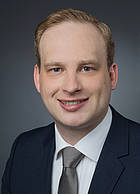 Political economist (Dr.) Alexander Donges, gaining his title by being a Thyssen academic mercenary at Mannheim University |
Tags: academia, Adolf Hitler, Alexander Donges, Alfried Krupp, Amelie Thyssen, anonymous holdings, anti-Semitism, armaments, armaments manufacture, aryanised, Aufarbeitung, August Thyssen, Bank voor Handel en Scheepvaart, banking consortium, Book review, camouflaging of armaments financing, Cold War, Concern Politics, denazification board, Deutsche Bank, dictatorship, disenfranchisement, dissident academics, doctoral thesis, Duisburg, entrepreneurial advantages, Essen, Essener National-Bank AG, Faminta AG, Finance Ministry, foreign exchange regulations, freedom of action, Fritz Thyssen, further processing, Georg Solmssen, Georg Thyssen-Bornemisza, German academia, German media, German steel industry, Germany, Glarus, H-Soz-Kult, Henry Nathan, Holland, Holocaust, Jakob Goldschmidt, Jewish Assets Levy, Joseph Thyssen, Judenvermögensabgabe, Krupp-concern, Kurt Martin Hirschland, long-term investment strategy, Madrid, Manfred Rasch, Market Economy, Metallurgische Forschungsanstalt, Monte Carlo, myth, Nuremberg Trials, Ottmar E Strauss, Paul Silverberg, persecution of the Jews, Reich Flight Tax, Robert Ellscheid, Rotterdam, Schöningh Verlag, Sehepunkte, self-interest, Simon Hirschland Bank, State Economy, supervisory board, Switzerland, tax evasion, tax investigation, The United Steelworks under National Socialism, Third Reich, Thyssen & Co, Thyssen in the 20th century, Thyssen Industrial History Foundation, ThyssenKrupp AG, ThyssenKrupp archives, Tim Schanetzky, Tobias Birken, United Steelworks, US bond creditors, USA, Vereinigte Stahlwerke, Weimar Republic, Wilhelm Roelen, World War One, World War Two
Posted in The Thyssen Art Macabre, Thyssen Corporate, Thyssen Family Comments Off on Book Review: Thyssen in the 20th century – Volume 1: „The United Steelworks under National Socialism, Concern Politics between Market Economy and State Economy“, by Alexander Donges, published by Schöningh Verlag, Germany, 2014.
Tuesday, September 15th, 2015
| Es hat sieben Jahre seit der Veröffentlichung unseres Buches über die Thyssens im Asso Verlag Oberhausen gebraucht, bis die erste Tranche der „offiziellen“ Thyssen Antwort heraus gekommen ist, in der Form der ersten einer Reihe von acht Büchern, die von der Fritz Thyssen Stiftung und der neuen Stiftung zur Industriegeschichte Thyssen finanziert, und vom böswilligen Professor Manfred Rasch, Leiter des ThyssenKrupp Konzernarchivs, orchestriert werden; dessen Voreingenommenheit sich in der Tatsache manifestiert, dass auf unser Buch zwar oft Bezug genommen, es aber nie zitiert wird.
Prof. Rasch schafft es sogar, unsere Existenz zu verleugnen, indem er behauptet, der verstorbene Baron Heini Thyssen-Bornemisza sei zeitlebens mit seinem Vorhaben gescheitert, eine authorisierte Biografie in Auftrag zu geben.
Nach einigen Verzögerungen sind 2014/5 die ersten drei Bücher der Serie erschienen: „Die Vereinigte Stahlwerke AG im Nationalsozialismus“; „Zwangsarbeit bei Thyssen“ und „Die Thyssens als Kunstsammler“. Wir werden alle drei in den kommenden Wochen rezensieren.
Erstaunlicherweise sind die Autoren der Bücher alle jüngere Akademiker, ohne bzw. mit geringer bisheriger Kenntnis oder praktischer Erfahrung des jeweiligen Themas, und die als „unabhängige Historiker“ beschrieben werden. Es heisst, sie würden „eine Forschungslücke“ in der Geschichte der Thyssen Familie, der ThyssenKrupp AG und der Thyssen-Bornemisza Gruppe „schließen“.
Da diese Autoren jedoch von eben diesen Personen, Unternehmen und assoziierten Stiftungen beauftragt, gesponsort und unterstützt worden sind ist es nicht zutreffend, sie als „unabhängig“ zu beschreiben. Solch eine Aussage ist vielmehr im besten Falle irreführend und im schlimmsten Falle betrügerisch.
Im Falle des herausragenden Investors in diese Arbeiten, die in weiten Teilen nichts anderes als akademische Hagiografien zu sein scheinen, sollte man sich daran erinnern, dass die Fritz Thyssen Stiftung von Amélie Thyssen gegründet wurde, die der NSDAP bereits 1931 – also zwei Jahre vor ihrem Mann Fritz Thyssen – beigetreten war, und die niemals öffentlich bereut oder ihr Bedauern für ihre Unterstützung Adolf Hitler’s zum Ausdruck gebracht hat.
Man muss sich auch fragen, warum nicht erfahrenere Akademiker mit erwiesenem Wissen und Fähigkeiten für dieses wichtige und heikle Program gewonnen werden konnten. Es ist anzunehmen, dass dies entweder darauf basiert, dass die Junioren „formbarer“ sind oder darauf, dass die höher gestellten Wissenschaftler nicht bereit waren, ihren eigenen Ruf zu gefährden, um die trübe Geschichte der Thyssens aufzupolieren.
Hierbei ist für die beaufsichtigenden Projektleiter Prof. Margit Szöllösi-Janze (Universität München) und Prof. Günther Schulz (Universität Bonn) die Übergangslinie hin zur akademischen Hurerei wohl schon sehr verschwommen, da generell in den letzten 55 Jahren so viele akademische Forschungsprojekte in Deutschland von eben dieser Fritz Thyssen Stiftung finanziert worden sind. Es dürfte äusserst schwierig sein, sich von dieser ewiglich betriebsbereiten Stipendien-Pumpe zu emanzipieren.
Demgegenüber beschuldigte uns Manfred Rasch während unseres Besuchs im Archiv der ThyssenKrupp AG 1998 nicht nur, das Empfehlungsschreiben von Heini Thyssen gefälscht zu haben, er war auch extrem unkooperativ und behauptete, mit der Geschichte der Thyssen Familie, von der er in negativen Tönen sprach, nichts zu tun zu haben. „Sein“ Archiv enthalte kein Material über die Thyssen Familie, sagte er. Die Frage lautet also: Was hat sich verändert, dass er nunmehr ein Mitwirkender bei diesem Projekt ist?
Wir nehmen an, es war unsere Publikation “Die Thyssen-Dynastie. Die Wahrheit hinter dem Mythos” und die ungünstige Berichterstattung in der Frankfurter Allgemeinen Zeitung, da dies der Zeitpunkt zu sein scheint, an dem das akademische Programm der Schadensbegrenzung von ihm, der Familie und dem Unternehmen in Gang gesetzt wurde.
Guido Knopp, die graue Eminenz der deutschen TV-Geschichts-Dokumentation, hat in einem seiner Programme gesagt, „unsere Generation ist nicht verantwortlich, für das, was unter den Nazis geschehen ist, aber sie ist umso verantwortlicher für das Erinnern daran, was passiert ist.“
Im Licht der Thyssen Geschichte wirft dies die Frage auf: wie sollen wir die Geschichte der Nazi-Ära angemessen recherchieren und daran erinnern, wenn Menschen wie die Thyssens 70 Jahre lang auf den Beweismaterialien sitzen und sie nur einigen Personen unter privilegierten, akademischen Kriterien zur Verfügung stellen und sie so der Wahrnehmung durch die allgemeine Öffentlichkeit entziehen?
Das Resultat solch einer undurchsichtigen Aufarbeitung kann nur eine Beschönigung sein und diese Serie, genauso wie etliche Bücher die in der Vergangenheit von der Thyssen Organisation unterstützt wurden, enthält davon ganz offensichtlich sehr viel. Und wenn nicht in Fakten, dann in Mutmaßungen.
Doch soweit es ersichtlich ist werden in diesen Büchern auch einige wichtige Eingeständnisse gemacht, vermutlich damit ein Mindestmaß an Glaubwürdigkeit eingehalten werden kann, oder vielleicht auf Druck der am meisten voraus denkenden Mitglieder des Teams. Diese Tatsache bestätigt für uns den Wert der Zeit und Anstrengung, die wir darin gesteckt haben, das erste ehrliche Portrait überhaupt der Thyssen Familie und ihrer Aktivitäten zu zeichnen.
Es freut uns, dass wir damit den angestrebten Effekt erzielt haben, nämlich die Organisation dazu zu bewegen, von der alten Version der Geschichte abzurücken, welche sich weigerte überhaupt etwas zuzugeben, das negativ ausgelegt werden konnte und die Thyssens immer nur im Licht eines selbstlosen Heldentums und makellosen Stolzes darstellte, die sich besonders in einer angeblichen Abwendung von den Idealen der Nazis äusserten.
Ein 94 Jahre alter, ehemaliger Auschwitz-Buchhalter, Oskar Gröning, der selbst nie an Tötungen beteiligt war, wurde vor Kurzem zu vier Jahren Haft verurteilt. Er zeigte große Reue und entschuldigte sich für seine Mitwirkung am Massenmord, eine Haltung, die nicht von vielen seiner Mitbeschuldigten gezeigt worden ist, falls überhaupt jemals in dieser Form.
Es fühlte sich an wie eine Äußerung, die abgestimmt war, um ein neues Bild von Aufarbeitung zu präsentieren, eine offenere, ehrlichere Aufarbeitung, die auch mit den Opfern mitfühlend ist. Oder vielleicht ist Herr Gröning nur ein besonders erleuchteter Mensch.
Außer Herrn Gröning’s Äußerung kommentierte der Staatsanwalt dann noch folgendermaßen: Auschwitz hätte nicht nur mit einzelnen Straftaten zu tun gehabt, sondern sei ein „System“ gewesen, und „jeder der zu diesem System beigetragen“ habe, sei „verantwortlich“.
Die Thyssens haben in vielfältiger Weise und sehr viel mehr als viele andere zum Nazi System beigetragen, zum Beispiel indem sie halfen, Hitler’s Truppen so massiv zu bewaffnen, dass in weiten Teilen Europas das Nazi-Terrorregime eingerichtet werden konnte. Ihre Nachfahren, die von den unmoralischen Gewinnen ihrer Ahnen (und Ahninen) profitiert haben, und dies noch tun, haben sehr viel mehr Grund als die allgemeine deutsche Öffentlichkeit heute, sich zu entschuldigen und sicherlich daran zu erinnern, was genau geschah.
Die Frage ist: werden sie je eine ähnliche Äußerung abgeben, wie dies Oskar Gröning getan hat?
Und noch wichtiger: falls nicht, warum nicht? |
|
 "Wer die Musik bezahlt bestimmt die Melodie". Amelie Thyssen, die ewige Sponsorin (copyright Fritz Thyssen Stiftung) |
Tags: Adolf Hitler, akademische Hurerei, Amelie Thyssen, Asso Verlag, Aufarbeitung, Auschwitz, Baron Heini Thyssen-Bornemisza, Die Thyssen-Dynastie. Die Wahrheit hinter dem Mythos, Die Thyssens als Kunstsammler, Die Vereinigte Stahlwerke AG im Nationalsozialismus, Frankfurter Allgemeine Zeitung, Fritz Thyssen, Fritz Thyssen Stiftung, Geschichte der Thyssen Familie, Guido Knopp, Günther Schulz, Heini Thyssen, Manfred Rasch, Margit Szöllösi-Janze, NSDAP, Oberhausen, Oskar Gröning, Stiftung zur Industriegeschichte Thyssen, Thyssen Familie, Thyssen-Bornemisza Gruppe, ThyssenKrupp AG, ThyssenKrupp Konzernarchiv, Universität Bonn, Universität München, Zwangsarbeit bei Thyssen
Posted in The Thyssen Art Macabre, Thyssen Art, Thyssen Corporate, Thyssen Family Comments Off on Ein Umschreiben der Geschichte – Thyssen im 20. Jahrhundert: Immer noch voller Rechtfertigungen und Beschönigungen, mit einer erheblichen Anzahl von offensichtlichen Auslassungen – aber doch auch einigen, manchmal erstaunlichen Eingeständnissen.
Tuesday, September 15th, 2015
|
It has taken seven years since the publication of our crucial book about the Thyssens (in the Asso Verlag publishing company of Oberhausen/Ruhr) for the first instalment of the „official“ Thyssen response to appear, in the form of the first in a series of eight books, co-financed by the Fritz Thyssen Foundation and the newly formed Thyssen Industrial History Foundation; orchestrated by the malevolent Prof. Manfred Rasch, chief archivist of ThyssenKrupp AG, whose prejudice is manifest in the fact that while our book is often referred to, it is never credited.
Prof. Rasch even manages to deny our existence by claiming that the late Baron Heini Thyssen-Bornemisza failed in his ambition to commission an authorised biography.
In 2014/5, following numerous delays, three volumes of the series have appeared: “The United Steelworks under National Socialism”, “Forced Labour at Thyssen” and “The Thyssens as Art Collectors“. We will review all three over the coming weeks.
The authors of the books are all, somewhat surprisingly, junior academics with no or limited previous knowledge or practical experience of their subjects and described as „independent historians“, who are said to be „closing the gaps“ in research concerning the history of the Thyssen Family, ThyssenKrupp AG and the Thyssen-Bornemisza Group.
However, as the authors were commissioned, funded and assisted in their research by the same people, commercial organisations and related foundations, there can be no way in which they could be accurately described as „independent“ and such a claim is at best misleading and at worst fraudulent.
In the case of the major investor, in what often appears to be little more than an academic hagiography, it should be remembered that the Fritz Thyssen Stiftung was started by Amélie Thyssen, who had joined the Nazi party in 1931 – two years before her husband Fritz Thyssen – and who never publicly recanted or displayed any regret for her support of Adolf Hitler.
One also wonders why senior academics of proven knowledge and ability were not won over to deal with this important and sensitive program. One has to assume that it was either because the juniors were more „malleable“ or because more senior academics were not prepared to risk damaging their own reputations while polishing the Thyssens’ tarnished history.
Of course for the project’s supervising professors Margit Szöllösi-Janze (Munich University) and Günther Schulz (Bonn University) the lines of academic whoring must be extremely blurred, as so many general academic research projects in Germany in the past 55 years have been funded by this same Fritz Thyssen Foundation. It must be incredibly difficult to emancipate oneself from this ever primed sponsorship pump.
By contrast, when we visited the archives of ThyssenKrupp AG in 1998, not only did Manfred Rasch accuse us of forging our letter of introduction from Heini Thyssen, but he was also offensively un-cooperative and purported to have nothing to do with the history of the Thyssen family, who he spoke of derisively and said that „his“ archive contained no material that related to them. So the question is: what has changed for him to now be a contributor to such a project?
Presumably, it was the publication of „The Thyssen Art Macabre“ and the resulting adverse publicity in the Frankfurter Allgemeine Zeitung, as this appears to be the point in time when his, the family’s and the corporations’ academic program of damage limitation was conceived.
Guido Knopp, the éminence grise of German historiography, has said in one of his popular television programs that „our generation is not responsible for what happened under the Nazis, but we are responsible for keeping the memory alive of what happened“.
In light of the Thyssen story, this begs the question: how are we supposed to adequately research and remember the history of the Nazi period if people like the Thyssens sit on evidence for 70 years and reveal it only to a selected few under privileged, academic criteria, thus keeping it very much outside the perception of the general public?
The result of such an opaque approach to Aufarbeitung can only be an exercise in vindication and in this series, as with so many books supported in the past by the Thyssen organisation, there is plenty of that. And if not in fact, then in conjecture.
But as far as we can see there are also now important admissions being made, presumably in order to retain a modicum of credibility, or perhaps at the insistence of the more forward thinking members of the team. This fact vindicates the time and effort we expended in producing the first honest portrayal of the Thyssen family and its activities.
We are delighted that our book has had the intended effect, namely to force the organisation to depart from the old official version of events which refused to admit anything that could be considered negative and only ever represented the Thyssens in a light of selfless heroism and untarnished pride, particularly manifest in a claimed rejection of Nazi ideals.
Recently a 94-year-old German former Auschwitz camp administrator, Oskar Gröning, who had not been directly involved in the killings, was sentenced to four years in prison. He showed deep remorse and apologised for his involvement, not something often displayed by his co-accused, if ever.
It felt like a concerted effort to present an image of Aufarbeitung which is a new, more open and honest way, and one that is explicitly sympathetic with the victims. Or maybe Mr Gröning is just a very enlightened individual.
In addition to Gröning’s statement, the public prosecutor commented that far from being just about individual crimes, Auschwitz was very much about „a system“, and that „whoever contributed to that system was responsible“.
The Thyssens contributed in many ways and much more than many others to the Nazi system, for instance by helping to arm Hitler’s troops to the point where the Nazi terror regime could be implemented over much of Europe. Their descendants, who have profited and continue to do so, from their forefathers’ (and mothers’) ill-gotten gains, have far more reasons than the German general public today to apologise and certainly to remember.
The question is: will they ever make a comparable statement to the one Oskar Gröning has made?
And more importantly: if not, why not? |
|
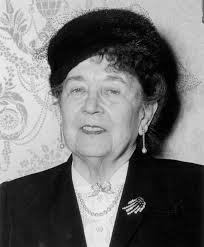 "He who pays the piper calls the tune". The eternal sponsor, Amelie Thyssen (copyright Fritz Thyssen Foundation) |
Tags: academic whoring, Adolf Hitler, Amelie Thyssen, Asso Verlag, Aufarbeitung, Auschwitz, authorised biography, Baron Heini Thyssen-Bornemisza, Bonn University, Forced Labour at Thyssen, Frankfurter Allgemeine Zeitung, Fritz Thyssen, Fritz Thyssen Foundation, Guido Knopp, Günther Schulz, Heini Thyssen, history, independent historians, junior academics, Manfred Rasch, Margit Szöllösi-Janze, Munich University, Nazi Party, Oberhausen, Oskar Gröning, Ruhr, senior academics, The Thyssen Art Macabre, The Thyssens as Art Collectors, The United Steelworks under National Socialism, Thyssen, Thyssen Bornemisza Group, Thyssen Family, Thyssen Industrial History Foundation, ThyssenKrupp AG, whitewash
Posted in The Thyssen Art Macabre, Thyssen Art, Thyssen Corporate, Thyssen Family Comments Off on Rewriting History – Thyssen in the 20th century: Still an overall exercise in vindication or whitewash, with a good number of obvious omissions – but admittedly featuring the occasional, important and sometimes puzzling admission.
Wednesday, September 2nd, 2015
| It was recently announced that the Thyssen-Bornemisza Museum in Madrid has suffered a loss of some 4.5 million Euros during 2014. Considering the fragile state of Spain’s economy and the fact that, contractually, they are not permitted to capitalise on the value of the collection by selling any of the pictures, it was bad news.
But worse was to come. For it was also revealed that the total legal costs of defending a claim by surviving members of a German Jewish family against the Thyssen-Bornemisza Museum for the return of a picture painted by Camille Pissarro that they claim to have sold under duress to the Nazis in 1939, and which was subsequently procured by the Thyssen family before being sold on to the Spanish nation, has now reached 1.3 million Euros.
Heini Thyssen and his father had always used their art collection as a smoke screen behind which they could hide the fact that much of their fortune was the result of profits earned fuelling and arming the Third Reich and supplying it with banking facilities.
One of the unfortunate effects of such a restitution claim is that it reminds people of the Thyssens’ Nazi past and the fact that it is the Spanish people who are being obliged to fund the protection of the Spanish ‘investment’ as well as the defence of the Thyssens’ name, who in turn have not exactly been forthcoming in contributing to the coffers of the Spanish tax authorities.
And while the American lawyers are representing the Cassirers on a contingency basis, which avoids the family having to make any contribution to costs, the plaintiffs remain all too aware that every time they mount another appeal (which they are doing at this very minute), the Spanish legal fees, for which there is no ultimate profit which they can be offset against, continue to mount. As do the Museum’s losses. Thus there must come a time when the Spanish will be obliged to ‘take a view’ and hand the picture back.
To us it has always been clear that this collection would one day reveal itself as a poisoned chalice for the host country. The Cassirer claim, if successful, could open the gates to further claims against the museum, as there is no shortage of paintings in its holdings with questionable provenances, a fact that the Spanish failed to identify by independent verification before they committed to buy. The potential for a major eclat is intrinsic to the Thyssen-Bornemisza Collection. The only question is: how long will it take to unravel?
+ + + + + + +
On 4th April 2016 Mark Kochanski commented:
In a recent court brief the Foundation contends that the plaintiffs (the Cassirers) ”continue their campaign to tarnish the Foundation’s image with “red flags” to suggest actual knowledge of the 1939 taking or, at the very least, a level of negligence that warrants punishment.” The Thyssen-Bornemisza Museum has tarnished its own image by knowingly hoarding Nazi looted art in violation of the Washington Conference Principles and the Terezin Declaration. This is shameful and the “Baroness” needs to be held to account. |
|
 Camille Pissarro: "Rue St Honore, apres-midi, effet de pluie" (1897). |
Tags: appeal, art collection, banking, Camille Pissarro, Cassirer, Cassirer claim, contingency, Heini Thyssen, legal fees, Madrid, Nazi, provenance, restitution claim, Spain, Spanish tax authorities, Third Reich, Thyssen Family, Thyssen-Bornemisza Collection, Thyssen-Bornemisza Museum
Posted in Thyssen Art Comments Off on The Thyssens’ Poisoned Chalice
Monday, February 2nd, 2015
| I often wondered what my reaction would be if and when Tita finally sold Villa Favorita; the Thyssen-Bornemiszas’ “ancestral home”, or the closest thing they had to one, on the shore of Lake Lugano. Now I know, but I have to admit it did come as some surprise, when I realised that I was feeling quite emotional. As if I have suffered some personal loss and, in a way, I suppose I have. For during my various visits to Francesca or Heini and sometimes both, at the Villa Favorita, some twenty plus years ago, I never had anything less than an extremely enjoyable time.
But that was in those golden days before I wrote The Thyssen Art Macabre and everyone but Heini and Tita blamed me for their forbears’ misdeeds. For it is a little known fact that the rich often don’t like journalists or writers because they have managed to convince themselves that it wasn’t their fault that they, or the aforementioned forbears, did what they did, but the messenger’s fault for revealing it.
Now there were three ways to get to Villa Favorita, and probably still are: by road, by plane to Milan and taxi to Lugano or by plane to Geneva and a local connecting flight to Lugano (which has a notoriously short runway that Prince Charles overshot. Thus successfully diverting attention away from the purpose of his visit, which Heini insisted was to persuade him to move his art collection to Britain.)
I tried all three options, the latter part of the second being arranged by the staff at Villa Favorita and consisting of a reliance on the services of an ancient Packard, Dodge or Chevrolet driven by a man calling himself The Swiss Cowboy, who, with little or no encouragement, accompanied his renditions of Hank Williams classics on an ancient Gibson acoustic, while simultaneously challenging three lanes of busy afternoon traffic. His passengers’ eventual arrival in a state of catatonic shock subsequently awarding Heini and Francesca endless amusement!
Actually, you can also get there by train, which I seem to remember doing once, but I can’t remember anything about it, apart from being picked up by Francesca in her brand new BMW M3 convertible, which she drove with sufficient speed to replace my calm well-being with, for her, an amusing degree of terror.
I also tried the more local flight path via Geneva, but the second part of the journey involved navigating through the mountains with only a matter of feet between wing tips and snowy peaks, thus resulting in even greater terror and subsequent hysteria.
Sometimes we slept in one of the guest rooms, behind and above the Villa where the motley crew of dogs would come and wake us before waiting for breakfast to arrive. I also stayed with Francesca at her separate house, looking down on the Villa and out over the sparkling lake. And other times at the little Italian Hotel, down on the lakeside where the owner would sing Puccini while serving the customers supper, as God supplied the instrumental accompaniment, in the form of a magnificent thunderstorm.
The Villa’s banqueting hall was designed to seat eighty guests so, weather permitting, we ate lunch on the terrace and supper in an alcove with Tita or Francesca and sometimes Simon Levie; the highly entertaining art historian and director of the Rijksmuseum who, when I complained about the long-stemmed wine glasses with the miniature green bowls engraved with hunting scenes, and how they held insufficient wine and looked like something Heini had bought in a charity shop, giggled and said, while we doubtless all agreed, they were very old Hungarian glasses worth at least ten-thousand pounds each.
We also drank much better wine than Tita would ever serve in all the years I dined with Heini in Spain. One night with supper at the Villa we started on 1970 Margaux Grand Cru and stayed up all night drinking ever more expensive wines. Giorgio, his wonderfully elegant Italian butler, eventually started to plead with Heini not to be asked to open bottles worth thousands, because we were so obviously way past the point where our critical faculties were any longer operating. But Heini giggled and took even greater pleasure in his demands. After that Giorgio used to welcome me back with a resigned smile, while shaking his head from side to side.
Some evenings we would all go out to a restaurant. Heini and Tita would be driven in his Mercedes 600 Pullman, for which he had paid a premium for the removal of the glass division between the driver and his passengers. We would follow in another Mercedes with two bodyguards and their guns; the same bodyguards who Heini later told Tita, had drunk all his most expensive wines; while smiling at me across the table.
Tita often wore a solitaire diamond ring in which the pillow-shaped, pure white diamond must have been nearly two inches long. She also wore diamond and emerald earrings that were so heavy she had to have gold hooks over the top of her ears to support them. But this was in the days when Heini had his own jet and an ocean-going yacht, as well as the second biggest art collection in the world.
Two or three times he took me round the museum and into the storage room, which was like being inside a giant filing cabinet containing huge files on which pictures were hung; hundreds of them. He never talked much about the paintings or the artists, just anecdotes relating to their acquisition; how much he paid for them and how much they had become worth after being restored; though once, when we were both feeling rather emotional, Heini quietly cried and told me that he would have given his entire collection in return for being able to paint.
Another day, the entire board of directors from General Motors arrived for a meeting with Heini, which should have had nothing to do with me. But before I could arrange alternative entertainment for myself, Tita informed me that the men had arrived with their wives, for whom she was apparently expected to act as hostess and entertain for lunch on the terrace and expected me to help her. It wasn’t an order but it was close! And much to my surprise, it proved to be an enjoyable and valuable experience. It was the first time that I had seen Tita in full charm mode and I have to admit, it was extremely impressive, to both me and to the corporate wives.
As the only male guest I didn’t really have to work very hard. The palatial backdrop helped me give my best Noel Coward impression and the rest was down to the hot sun and ‘ennnnndless’ champagne.
Heini didn’t like the Villa very much. No one did. Only his father had done and Sandor Berkes, Heinrich’s surviving, deeply wonderful Hungarian chauffeur, manservant, curator and companion still did. It was fusty and damp and styleless; full of fake grandeur and art and guilty secrets.
I felt sorry for it. For despite the fact that Villa Favorita and Switzerland had protected the Thyssen-Bornemisza fortune, it had never been appreciated or a real home to any of them. Just a monument to a very, very rich but dysfunctional family, including four banished ex-wives and their children.
The last time I stayed at the Villa, I spent two days on Francesca`s beautiful faux Renaissance terrace, making a piece of sculpture. It consisted of a cracked wooden heart with a giant cast iron nail driven through it; in anticipation, perhaps, of how I already sensed the Thyssen-Bornemisza family would come to an end, at the Villa Favorita, by the side of Lake Lugano. |
|
 Grand Cru Classe: Heini Thyssen and David Litchfield at Villa Favorita, ca. 1989 (photo: Nicola Graydon) |
Tags: 1970 Margaux Grand Cru, art collection, BMW M3 convertible, bodyguards, Chevrolet, Dodge, General Motors, Geneva, Gibson acoustic, Lake Lugano, Lugano, Mercedes 600 Pullman, Milan, Noel Coward, Packard, Prince Charles, Puccini, Rijksmuseum, Sandor Berkes, Simon Levie, Switzerland, The Swiss Cowboy, The Thyssen Art Macabre, Thyssen-Bornemisza, Villa Favorita
Posted in The Thyssen Art Macabre, Thyssen Art, Thyssen Corporate, Thyssen Family Comments Off on Thanks For The Memories……………of Villa Favorita.
Sunday, February 1st, 2015
| The lack of a fair distribution of assets in the world has reached a stage where the wealthiest 1% own more than the remaining 99% of the population, according to Credit Suisse. The Thyssens are a prime example of how a fortune, created through the dilligence of a few founding fathers and generations of their plants’ workforce, has multiplied exponentially through the use of financial instruments, multiple citizenships, political lobbying, press manipulation and, most of all, tax avoidance. It was the last great Thyssen himself, Hans Heinrich („Heini“) Thyssen-Bornemisza, who told us: „I am a tax evader by profession. If you wanted to be correct, I should be in jail“. Villa Favorita in Lugano, Ticino, Switzerland, the closest the Thyssen-Bornemiszas ever got to a family seat, has been the symbol of their often rapacious attitude – hidden behind the veneer of their famous art collection – which has until recently gone unquestioned, accepted and even admired by the wider public.
Even before the First World War, Heini`s grandfather August, whose power base were the German steel mills and coal fields of the Ruhr, created a family bank in Rotterdam, the Bank voor Handel en Scheepvaart (BVHS), as an offshore bank for the Thyssen industrial empire. Heini’s father Heinrich, who had gained Hungarian nationality and a contrived aristocratic status through marriage, settled in Holland, took charge of the bank and fended off the post-war allied reparation claims, as well as the spiralling early 1920s hyperinflation. His Dutch lawyers created further financial instruments such as Rotterdamsch Trustees Kantoor and Holland American Investment (respectively Trading) Corporations. This situation later allowed Heini to consequently deny the family`s German connections while they continued well into the 1980s to draw their profits from the country.
The Thyssens were very well connected on the highest political level. They hosted Adolf Hitler several times at their residences in Holland and Germany during the Weimar Republic and, amongst other contributions, made a loan of 350,000 Reichsmark through BVHS to finance the Brown House in Munich. After August’s death in 1926, and on the advice of Heinrich`s social and financial mentor Eduard von der Heydt, the Thyssens began to orientate themselves towards Switzerland. Heinrich started buying works of art to reinforce his „gentlemanly“ image but mainly, according to Heini, „as an investment and a way of moving money“. The 530 paintings he acquired between 1928 and 1938, though of questionable quality and provenance in many cases, and earning negative reviews when the first 428 were exhibited as „Schloss Rohoncz Collection“ in Munich in 1930, laid the foundation of the Thyssen-Bornemisza Collection now housed in Spain.
In 1926 and 1931, in the Swiss canton of Schwyz, Heinrich`s advisors created the Kaszony and Rohoncz Collection Family Foundations to hold and protect his inherited corporate assets and his art purchases respectively. Then, in 1932, he purchased 50,000 m² of Lake Lugano shoreline, comprising sub-tropical gardens and 12 buildings, a plot which had once been a whole quarter of noble villas, the most important being Villa Favorita. As Heinrich had bought the main residence complete with all furnishings in order to immerse himself in the style of the former princely owner, Leopold of Prussia, from 1936 to 1940 he had another building erected to house his art. But the exact logistics of the transfer of the paintings from their various points of purchase into Switzerland has remained shrouded in secrecy (its move out of Switzerland to Madrid half a century later was almost celebratory by comparison!).
In 1937, Heinrich’s Lugano lawyer Roberto van Aken, achieved a most favourable tax deal for his client with the Ticino authorities, as well as a Swiss foreigner’s passport, on the understanding that the collection be opened to the public. But while that same year his curator Rudolf Heinemann produced the first Lugano-based catalogue, the collection remained closed. Presumably neither side thought it wise to draw attention to the fact that this German tycoon was sheltering in Switzerland as his businesses supported Hitler’s genocidal war of aggression and exploited industrial slave labour – even though Helvetia profited from coal imports out of Heinrich’s Walsum mine through the Swiss Bank Corporation in Zurich. His German managers regularly visited him there, including the director of the August Thyssen Bank in Berlin, which organised funds for the world-wide German counter-espionage through Switzerland.
After 1945, this mutually beneficial Swiss safehaven arrangement guaranteed that Heinrich, who was initially named on the list of war criminals to be judged at the Nuremberg war crimes trials, entirely escaped allied retribution. He died at Villa Favorita in 1947, untouched by public controversy, though ravaged by his long-standing, advanced alcoholism. The public myth of the Thyssen-Bornemiszas’ untainted background could now fully develop.
His main heir Heini sorted out the vast inheritance and negotiated a new tax deal with the Swiss authorities by promising in 1948 to open the collection to the public. And so, Heini Thyssen, who had only ever possessed questionable Hungarian identity papers extended him by his step-father, Janos Wettstein, from the Hungarian embassies in The Hague and Berne, in 1950, after several attempts and with American assistance, gained full Swiss citizenship. Having become a founding member of the jet set and polished his image with the help of his British, third wife Fiona, in the early 1960s Heini turned to buying art to distance himself from the shadows of the family history. Through Eric Pfaff, an international trust lawyer, working out of offices in Luxembourg and the Isle of Man, he discovered Bermuda and had his first financial instruments created there, while many of his art purchases were made tax-efficiently through Liechtenstein-based instruments such as Art Council Establishment and Internationale Finanz- und Kunsthandel AG.
Then, in the mid-1970s, the first light breeze of change started wafting in as the Ticino authorities introduced more rigorous tax laws. But far from agreeing a compromise, Heini Thyssen responded by moving his official residence first to Monaco and later on to the United Kingdom. When he also threatened to close the gallery at Villa Favorita – by then one of the town’s and canton’s main tourist attractions – his Lugano lawyer, Dr Franco Masoni, managed to push through an extension of his client’s advantageous Swiss tax deal. Clearly it was in Heini’s power to pressurise the city fathers by inviting them to „consider the detrimental effect [this closure would have] on suppliers and employees“ and adding with sarcastic irony that he felt sure his „leaving the canton could be achieved without any publicity“…
Despite the continuous Swiss incubation of the fortune of Heini Thyssen-Bornemisza, who, in his 60s, by now had three ex-wives and four children, it was in Bermuda, under British law, that his advisors created, in 1983, two family trusts to protect his Thyssen Bornemisza Group (TBG) and his collection of paintings and artefacts from possible feuds over inheritance. The latter had by now trippled in size to over 1,500 works of art and its value was being promoted through auction houses, international travelling exhibitions and a lavish, Sotheby’s-promoted „catalogisation“ programme.
Shortly after his final marriage in 1985, in England, to the Spanish fire-cracker Carmen Cervera (who, it is thought, may already have enjoyed Swiss citizenship as a result of her 1960s marriage to Lex Barker), she too began, with Thyssen money, to buy art and, immediately, instruments, such as Nautilus Trustees Limited in the south-Pacific Cook Islands, were created for her use. It was not least at her instigation, in the early 1990s, that Heini Thyssen sold half his collection to Spain for 350 million dollars (plus a similar cost in housing and complex administration fees) and divided the net proceeds, as well as the other half of the collection between his heirs, through further, tax-free Bermudan sub-trusts. Now Carmen, with Heini’s help, could turn to creating and advertising her own Carmen Thyssen-Bornemisza Collection, thus spinning the money machine ad infinitum, while simultaneously creating a new, higher-quality personal image for herself.
Considering the depth of gratitude the Thyssens should have felt towards Switzerland for shielding them from revelations of Nazi collaboration and profiteering, this end to the Villa Favorita public gallery was more than ignominious. Heini topped his arrogant attitude by denying the generous offer that the Swiss had actually made him, in 1986, for keeping his collection in Lugano. His daughter Francesca continued to keep the gallery alive for a while with a few exhibitions, but some fifteen years ago it closed its doors for the last time. It is difficult to understand, apart from their greed, why the Thyssens did not have the grace to leave an endowment of a small „starter“ selection of paintings, plus the villa and grounds as a gift to the town. Considering the size of their fortune, they could easily have done so (and one day it might turn out that it would have been a wise thing to have done). But presumably, having achieved an advantageous tax deal in Spain, based on their collection, such a gift would have caused…….. a tax problem!? It was Carmen Thyssen-Bornemisza’s charming lawyer Jaime Rotondo, who in 2013 confirmed to the Spanish press outlet El Confidencial/(in collaboration with the Consorcio Internacional de Periodistas de Investigacion), in a somewhat questionable quote, that „the contracts of technical and cultural assistance she has signed with Spain [for the cession of over 700 paintings of her private collection to various museums means that Carmen Thyssen-Bornemisza can live in Spain all the time she wants without having to pay tax on her patrimony there]“.
In 2002, Heini Thyssen died and his widow Carmen inherited his 60 million dollar TBG dividend shortfall and a 132 million dollar share in his private estate, also several houses including the „Dynasty-que“ seat of Villa Favorita. When a year later she submitted to the Lugano building authorities a pre-project for the erection of four modern villas on its grounds, Swiss alarm bells started ringing. The Neue Zürcher Zeitung urged the authorities to „save this Swiss national cultural treasure“ and added that the Swiss Homeland Security Authority (Heimatschutz) had asked the communal, cantonal and federal authorities to act. Even a purchase by all three levels jointly was suggested. But while the paper went to great lengths to accuse officials of „stubborn desinterest“, it failed to mention the asking price, which was only revealed a decade later as being over 100 million Swiss Francs.
Then, in 2004, Swiss Info reported that cantonal levels were finally awakening from their „lethargy“ and negotiating with Tita Thyssen over Villa Favorita. The mayor of Lugano said that the lakeside area was placed under the protection of the Ticino cantonal commission of cultural assets and the Swiss federal commission for the protection of historical monuments and landscapes. Tita had renounced building on this area in return for a permit to build behind the gallery. Suddenly, town and canton were in a great hurry to achieve a deal. But still the canton did not wish to make any gifts to Tita, who, a decade ago, was said to have left the place „slamming the door with her collection under her arm“, while Pascal Couchepin, Swiss Minister of the Interior, was quoted as saying he doubted a sale to a private entity could be achieved. A wealthy Lugano municipal councillor then put one million Swiss Francs on the table to help the commune and canton enter negotiations.
While in 2010 it became known that Tita Thyssen had sold the last building plot of the grounds for 30 million Euros for the completion of eight Herzog & Meuron-designed luxury apartments by early 2015, negotiations for the sale of the main estate went quiet again. During that time, on the back-drop of a global financial crisis leaving her homeland Spain with a heavy debt burden and big (especially youth) unemployment rate, Tita adopted two surrogate children in California, her son Borja married and had four children and the two started mud-slinging very publicly over inheritance issues. In 2013, it was reported that a court judgment in Bermuda had revealed one of the trusts, which Borja has a 35% entitlement in, alone to be worth 1 billion Swiss Francs. But despite the crisis, the Spanish media at first still treated scenes such as CCTV pictures of Borja breaking into Tita`s office at La Moraleja, Madrid, to gain financial information, or Tita’s very public insistence on paternity testing for Borja’s children as fun entertainment. Later the mood began to change and the Spanish press slowly dropped its tolerant approach, particularly when Offshore-Leaks (via SonntagsZeitung, Spiegel Online, Huffington Post and others) publicised the extent of Carmen Thyssen’s art handling tax avoidance schemes and King Juan Carlos abdicated amidst allegations of widespread corruption amongst the Spanish elite. Suddenly her turning up for board meetings at the Madrid museum in her Rolls Royce Phantom (something her late husband would never have had the bad taste to have done) was said to „leave employees and visitors open-mouthed“.
By 2012, while the Swiss business magazine Bilanz was still ranking her as 7th richest woman in Switzerland, in Spain Tita was claiming on a somewhat theatrical level, via Vanitatis, to be going through her own liquidity crisis, which she said was caused by „800 million Euros worth [a non-binding valuation by Sotheby’s] of art loaned free of charge by myself to the state of Spain for 13 years“. She could hardly hide her frustration at the Spanish still not having bought her paintings from her, as they had once done with her husband’s collection. But with the precarious state of the monarchy adding to the economic crisis, she should perhaps have been grateful that they did not hand her collection back, for her to fund its maintenance, insurance, exhibition etc. Carmen Thyssen was left with no option but to sell a Constable (The Lock) – apparently through Omicron Collections Limited in the Cayman Islands – allegedly for 20 million pounds sterling (doubling the purchase price of a suspiciously high 10 million pounds in 1990) and further humiliated in the summer of 2014 when the Spanish tax authorities carried out a very public raid on her yacht “Mata Mua” in Ibiza, while she was on board (as reported by El Mundo). In her immediate rage she threatened to leave Spain and move back to Villa Favorita with her two adopted girls in tow. Not the first time she had issued such a warning.
So the news in December 2014 that Tita Thyssen has sold Villa Favorita to the Italian cheese-making family Invernizzi, for 65 million Euros, was understandably picked up with huge interest by the Spanish media. The 28 days in which Heini`s children had the right to match the sale price and retain the villa in the family have elapsed, and the sale is now final. One presumes Tita will be paying a little parting gift of tax on this deal in Switzerland, regardless of which trust or foundation the ownership of the villa is held in, as she waves good-bye to the country and brings to a close 83 years of a colourful relationship between the Thyssen-Bornemisza family and Ticino. It will be interesting to see how the Swiss will treat their memory of this family now that they have no reason to remain diplomatic, and equally so to see how the Spanish will treat Carmen Thyssen as she can no longer threaten them with a „cultural exodus in reverse“. There is one thing that could be almost guaranteed: that the opportunity once open to Heini Thyssen to play off one country against another, in their eagerness to host his fortune, will not be inherited by his successors.
p.s.: At our time of going to press, the Spanish press outlet Economia Digital reveals that Carmen Thyssen has this week bought two properties, for herself and her son Borja, in Andorra, for a total of 10 million Euros and comments: “Tita Cervera has Swiss nationality and since her youth her fiscal residence has been there. But for the last 20 years she has been a habitual resident of the Principality of Andorra. Sources knowledgeable about the aristocrat`s movements have signalled to this paper that she would be finalising a change in her tributary situation according to the double taxation agreements which Andorra holds with different countries and that it will permit her to also transfer her fiscal residence to the country where she actually lives.”
With the “99%” of the population of Spain increasingly taking to the streets to complain about the austerity policies, one wonders how much longer these shenanigans of the residual “1%” will last. |
|
 " Crocodile Tears ". (Carmen Cervera aka Tita Thyssen-Bornemisza, photo: El Confidencial - Vanitatis, Spain) |
Tags: 1920s hyperinflation, Adolf Hitler, Alcoholism, allied reparation claims, allied retribution, Andorra, art collection, Art Council Establishment, August Thyssen, August Thyssen Bank, Bank voor Handel en Scheepvaart, Berlin, Bermuda, Berne, Bilanz, Borja Thyssen-Bornemisza, Brown House Munich, California, Carmen Cervera, Carmen Thyssen-Bornemisza Collection, Cayman Islands, CCTV, coal mine, Consorcio Internacional de Periodistas de Investigacion, contrived aristocratic status, Cook Islands, Credit Suisse, double taxation agreement, Dr Franco Masoni, Dutch lawyers, Economia Digital, Eduard von der Heydt, El Confidencial, El Mundo, Eric Pfaff, fair distribution of assets, financial instruments, Fiona Campbell-Walter, Fiona Thyssen-Bornemisza, First World War, fiscal residence, Francesca Thyssen-Bornemisza, German counter-espionage, Germany, global financial crisis, habitual resident, Hans Heinrich Thyssen-Bornemisza, Heimatschutz, Heini Thyssen, Heinrich Thyssen-Bornemisza, Helvetia, Herzog & de Meuron, Holland, Holland American Investment Corporation, Holland American Trading Corporation, Huffington Post, Hungarian embassies, Hungarian nationality, Ibiza, industrial slave labour, inheritance, Internationale Finanz- und Kunsthandel AG, Invernizzi Family, Isle of Man, Jaime Rotondo, Janos Wettstein, jet set, John Constable, Kaszony Family Foundation, King Juan Carlos, La Moraleja, Leopold of Prussia, Lex Barker, Liechtenstein, list of war criminals, Lugano, Luxembourg, Monaco, multiple citizenships, Nautilus Trustees Limited, Nazi collaboration, Nazi profiteering, Neue Zürcher Zeitung, Nuremberg war crimes trials, offshore bank, Offshore-Leaks, Omicron Collections Limited, Pascal Couchepin, political lobbying, press manipulation, Principality of Andorra, questionable Hungarian identity papers, Roberto van Aken, Rohoncz Collection Family Foundation, Rolls Royce Phantom, Vanitatis, Yacht "Mata Mua"
Posted in The Thyssen Art Macabre, Thyssen Art, Thyssen Corporate, Thyssen Family Comments Off on The Times They Are A Changin (The Sale of Villa Favorita, Lugano – Part 1), by Caroline D Schmitz
Sunday, January 18th, 2015
| While both ThyssenKrupp and the Thyssen Bornemisza Group continue to pay academics and charitable foundations to rewrite their past, one member of the family has additionally been funding scholarship in order to buy an exalted academic identity for himself; with wealth polluted by the same tarnished history.
Lorne Thyssen-Bornemisza was born in Switzerland to the Scottish fashion model Fiona Campbell-Walter, who by the time of his birth was already separated from Lorne’s legal father, the Hungarian, Dutch, Swiss, German, Catholic, industrialist and art collector, Baron Hans Heinrich (Heini) Thyssen-Bornemisza; a man with his own identity problems, for whom Fiona had been his third wife.
As his second son, Lorne was also encouraged to adopt the ‘theatrical’ Austro-Hungarian title of ‘Baron’, despite the fact that in Switzerland (where waiters refer to him as ‘Mr Baron’), Austria and Hungary, the title has no legal status and Heini claimed his adopted son’s biological father was actually the American, Jewish, TV producer Sheldon Reynolds. But that didn’t stop Heini from accepting Lorne as a legal heir and supplying him with a dangerously generous allowance.
Lorne was educated at Le Rosey, a cosmopolitan, Swiss school that is perhaps better known for the wealth of its students’ parents than their off-springs’ academic achievement and from where he was expelled prior to completion of his International Baccalaureate studies. However, he did subsequently complete his basic Swiss Military Service while displaying less enthusiasm for gainful employment at the Thyssen Bornemisza Group´s corporate headquarters in Monaco.
Having adopted English as his first language, Lorne then established his colourful and extravagant social presence in London before endeavouring to read politics and philosophy at Edinburgh University. But as a result of the social distractions afforded him by his generous allowance, he failed to devote sufficient time to his studies and was obliged to abandon his academic ambitions.
He then moved to New York where he attended acting classes and even achieved some small measure of success in an off-Broadway Shakespeare play before moving on to Paris and from there to Beirut; where he acted in, and directed, a multi-million dollar, Thyssen-Bornemisza funded movie. He also adopted Muslim faith and became involved in Islamic mysticism, via the Sufi movement; whose funds he contributed to.
His generosity and the size of his inherited fortune were doubtless also instrumental in his being awarded a seat on the board of the Muslim Cogito Scholarship Foundation.
By now it must have begun to occur to Lorne that he could ‘procure’ academic status without the time-consuming inconvenience of having to study or take exams.
Heini had also taught him that cultural status could be obtained by the simple expedient of loaning out parts of his inherited art collection. A policy that would save on the cost of art storage and insurance.
So it was that he chose to loan his inherited collection of Muslim carpets to the Staatliche Museen zu Berlin; which resulted in a considerable enhancement of his standing amongst Germany’s cultural elite.
Considering the amount of time and effort that the Thyssen-Bornemiszas had invested in avoiding being considered German and denying their historic connections with the country, particularly during World War II, Berlin was, despite being the recognised centre of oriental carpet dealing, an extremely strange choice of location. Presumably it was an attempt to enhance his profile in Germany while his adopted family history was coming under academic scrutiny.
But given that Lorne wanted to achieve academic status in the UK, his choice of Oxford was logical, entirely predictable and possibly offered tax advantages to both parties. Given the Thyssens’ history of support for the Reich, use of industrial slave labour, involvement in violent anti-Semitism, profits from arms manufacturing in two World Wars, avoidance of reparations and retrieval of German assets by means of manipulated nationality and use of covert international banking, Lorne’s acceptance as an Honorary Fellow by the Wolfson College, Oxford University, in return for setting up the ‘Lorne Thyssen Research Fund for Ancient World Topics’, was nauseating; particularly as the College was originally founded and funded by Isaac Wolfson, a devout orthodox Jew and committed Zionist.
This was certainly not the first time that the Thyssens had used philanthropy to enhance their academic status while hiding the less palatable details of their past, which doubtless led to great aunt Amelie Thyssen’s creation of the Fritz Thyssen Foundation and aunt Gaby (Gabrielle Bentinck nee Thyssen-Bornemisza) giving money to Tel Aviv University via Lord George Weidenfeld, who developed a masterly skill in brokering such philanthropic deals. This process may also have encouraged Yad Vashem (Israel’s Holocaust Commemoration, Documentation, Research and Education Centre) to overlook the Thyssens´ involvement in the slaughter of one hundred and eighty Jewish slave workers as after dinner entertainment at their castle in Rechnitz, Burgenland, Austria, on 24./25.03.1945. For one of the unfortunate by-products of academic philanthropy is that in protecting their benefactors, seats of learning are often encouraged to participate in historical amnesia.
Subsequently, Lorne’s freshly-minted academic status may have awarded his recently opened Kallos Gallery in London’s Mayfair some additional degree of credibility in its sale of his ancient Greek artefacts; if only he had resisted having the temerity to announce that he had signed up to ‘read’ Classical Studies with the Open University (having first presented the OU with ‘two fully funded MA scholarships…made possible through the generosity of Baron Lorne Thyssen-Bornemisza. The scholarships will provide the full fees for two year part-time MA studentships in Classical Studies at the Open University’) presumably in an attempt to acquire some small measure of legitimate, academic achievement.
Though I doubt that professional image builders would have encouraged such a revelation, as it could only serve to demote his elevated status as a ‘Fellow’ and ‘Honorary Fellow’ elsewhere.
I admire the Open University and used to respect Oxford University as what I believe I should expect it to be; an incorruptible seat of learning. But I don’t admire or respect academic whoring. There is too much of it about and, in this case, it is in clear contradiction of the old Latin adage, ‘Pecunia non olet.’
https://www.wolfson.ox.ac.uk/person-type/honorary
https://www.wolfson.ox.ac.uk/clusters/ancient-world/lorne-thyssen-research-fund
http://www.open.ac.uk/Arts/classical-studies/baron-thyssen-ma-scholarship.shtml
(p.s.: Lorne Thyssen is also a Fellow of The Royal Numismatic Society. At its 2012 International Congress held at the Israel Museum in Jerusalem he acted as a chairperson with presentations given by members of Staatliche Museen Berlin, Tel Aviv University and Oxford University – thus closing the circle of – what we have the right to consider – duplicity). |
|
 Lorne Thyssen-Bornemisza pretending to be British and clean (www.thyssenpetroleum.com). |
Tags: academia, academic philanthropy, academic status, Amelie Thyssen, anti-Semitism, Austria, avoidance of reparations, Baron Thyssen MA Scholarship, Beirut, Berlin, Broadway, Burgenland, charitable foundations, Classical Studies, Cogito Scholarship Foundation, covert international banking, Edinburgh University, Fiona Campbell-Walter, Fritz Thyssen Stiftung, Gabrielle Bentinck, Germany, Hans Heinrich Thyssen-Bornemisza, Holocaust, Holocaust Commemoration, Holocaust Documentation, Holocaust Education, Holocaust Research, Honorary Fellow, Hungary, international baccalaureate, international banking, Isaac Wolfson, islamic mysticism, Israel Museum, Jerusalem, Kallos Gallery, Le Rosey, London, Lord George Weidenfeld, Lorne Thyssen, Lorne Thyssen Research Fund for Ancient World Topics, Lorne Thyssen-Bornemisza, manipulated nationality, Mayfair, Monaco, Muslim carpets, Muslim faith, New York, Open University, oriental carpet dealing, orthodox Judaism, Oxford, Oxford University, Paris, pecunia non olet, philanthropy, Rechnitz, Rechnitz Massacre, retrieval of German assets, scholarship, Shakespeare, Sheldon Reynolds, slave labour, Staatliche Museen zu Berlin, Sufi movement, Swiss military service, Switzerland, Tel Aviv University, The Royal Numismatic Society, Thyssen Bornemisza Group, Thyssen Petroleum, ThyssenKrupp, Wolfson College, World War II, Yad Vashem, Zionism
Posted in The Thyssen Art Macabre, Thyssen Art, Thyssen Corporate, Thyssen Family Comments Off on Lorne Thyssen – Buying Scholarship or: ‘does money smell’?
|