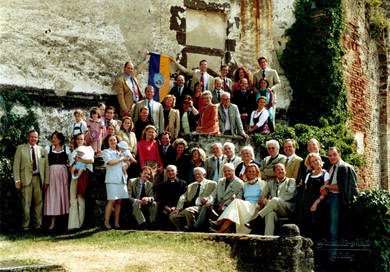
Thyssen Family
Sunday, December 14th, 2014
| Als ich 1992 Deutschland verließ und nach England zog hatte mein Vaterland gerade erst begonnen, den Kalten Krieg, während dessen die Aufarbeitung der Nazi Vergangenheit zum Erliegen kam, hinter sich zu lassen. In England hatte ich die unfassbare Gelegenheit mit David Litchfield an einer Biographie der Thyssen Familie zu arbeiten, für deren Vervollständigung und Publikation in England, Spanien und Deutschland wir 14 Jahre benötigten.
Jetzt bin ich zurück in Deutschland und freue mich zu sehen, dass ein neuer Wind in Sachen Aufarbeitung weht. Aber dem stehen die Hinterfragten teils immer noch mit erheblichem Widerstand entgegen. Dabei ist die Zeit nunmehr überreif für die Abkömmlinge derer, die damals in verantwortlichen Positionen waren, zu sagen „Ja, was passierte war schrecklich, und unsere Familien geben zu, was genau ihre Rolle dabei war und wir bekennen, dass es uns leid tut“.
Statt dessen geben speziell die Thyssens immer noch große Summen aus, um geklitterte Versionen ihrer Geschichte zu produzieren. Das ist besonders schmerzhaft für Leute wie mich, da meine Familienmitglieder Soldaten in Hitler`s Krieg waren, getötet wurden oder verletzt, und sie zu keinem Zeitpunkt auch nur die geringste Unterstützung erhielten, um mit ihren höchst traumatischen Kriegserlebnissen zu Rande zu kommen. Das ist eine Tragödie, die einen überwältigenden Langzeiteffekt auf die deutsche Gesellschaft hat. Und darum ärgere ich mich so über das Verhalten der Thyssens.
Heini Thyssen`s Witwe, Carmen Cervera, hat dieses Jahr in Spanien seine „Memoiren“ veröffentlicht. Das Meiste davon ist theatralischer Unfug, aber das Buch enthält auch einige, unbeabsichtigte interessante Informationen, die wir im neuen Jahr auf dieser Webseite vorstellen werden. Besonders konstrastieren werden wir dieses „Werk“ mit einem anderen, größeren Thyssen Weisswasch-Projekt, welches 2014 die ersten Früchte getragen hat.
Als unser Manuskript 2006 zirkulierte gründete Heini`s Sohn Georg Thyssen die „Stiftung zur Industriegeschichte Thyssen“ und schloss sich später mit der Fritz Thyssen Stiftung und dem ThyssenKrupp Archiv unter Manfred Rasch zusammen. Sie beauftragten über ein Dutzend Akademiker unter der Leitung von Margit Szöllösi-Janze, Günther Schulz und Hans Günter Hockerts, um eine Reihe von Büchern über „Die Thyssens im 20. Jahrhundert“ zu schreiben. Bisher sind zwei Bände veröffentlicht worden: „Die Vereinigte Stahlwerke AG im Nationalsozialismus“ von Alexander Donges und „Zwangsarbeit bei Thyssen“ von Thomas Urban. Ein dritter Band, “Die Thyssens als Kunstsammler” von Johannes Gramlich, soll im März 2015 erscheinen und danach mindestens fünf weitere Bände.
Obwohl diese Bücher in der Tat einige Eingeständnisse enthalten, so ist der überwiegende Tenor jedoch, dass eine direkte Verantwortung der Thyssens weiterhin nicht akzeptiert wird. Die verschleiernden Verschachtelungen der Missionsaussage können der Zusammenfassung einer Tagung entnommen werden, die zu diesem Projekt im Juni 2014 in der Berlin-Brandenburgischen Akademie der Wissenschaften stattfand.
In den kommenden Monaten und Jahren werden wir, basierend auf unseren Forschungen und im Interesse der historischen Wahrheitsfindung, unseren Lesern auf dieser Webseite eine detaillierte, kritische Analyse dieser Thyssen-finanzierten „Aufarbeitung“ zur Verfügung stellen. |
|
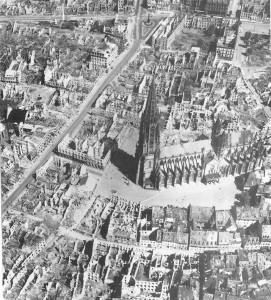 Freiburg im Breisgau nach einem britischen Bombenangriff, November 1944 |
Tags: Adolf Hitler, Alexander Donges, Aufarbeitung, Berlin-Brandenburgische Akademie der Wissenschaften, Carmen Cervera, Die Thyssens im 20. Jahrhundert, Fritz Thyssen Stiftung, Georg Thyssen, Günther Schulz, Hans Günter Hockerts, Heini Thyssen, Johannes Gramlich, Manfred Rasch, Margit Szöllösi-Janze, Nationalsozialismus, Stiftung zur Industriegeschichte Thyssen, Thomas Urban, ThyssenKrupp, Vereinigte Stahlwerke AG, Vereinigte Stahlwerke AG im Nationalsozialismus, Zwangsarbeit, Zwangsarbeit bei Thyssen
Posted in The Thyssen Art Macabre, Thyssen Art, Thyssen Corporate, Thyssen Family Comments Off on Warum ich mich über die Thyssens ärgere (von Caroline D Schmitz)
Thursday, July 12th, 2012
The most recent event in Tita’s endless odyssey of contradictions followed her sale of The Lock, the inherited Constable painting which she claimed only to be selling due to her shortage of liquidity resulting from Spain’s refusal to pay her for the ‘magnanimous’ loan of her pictures to the Thyssen Bornemisza Museum. Presumably she assumed the threatened sale of such an iconic, if rather boring painting would loosen Spain’s purse strings. However, the Spanish government remained steadfast. But Tita soon forgot her claimed liquidity crisis and long before the cash from the sale could possibly have arrived in her coffers, was soon celebrating her financial sponsorship of an archaeological project in Costa Rica and rebranding of herself as, would you believe, a philanthropist!
The sale itself was in fact rather a damp squib. For after much pre-publicity on the part of Christies to convince everyone that collectors would be falling over themselves to bid the paintings price up to stratospheric levels, there turned out to be only one buyer and the only reason it went for the ‘claimed’ £20 million (hammer price) was that according to the auction house, the work was guaranteed to sell courtesy of a third party ‘irrevocable bidder’ that dealers identified as one of Christie’s Russian clients and the UK press refused to mention. Newsweek proved more honest and even quoted Richard L Feigen, the NY based dealer as saying ‘The Constable sold for the price of a second-tier Warhol. It’s ridiculous!’ (A Rothko asking price at Basle Art Fair was $78 million while the Munch pastel drawing on paper went for $120 million at auction.)
Beatrice B Shoemaker gave a more informed, if damming explanation: ‘Third-party guarantees have been distorting the market for some time – conflict of interest being an unknown concept in these parts. The Constable actually sold on its putative reserve. Although Christies boasted this as the best ever Old Master Painting sale, the actual results show that over 50% of the lots sold (hammer price) at or below the low estimate…Current estimates reflect vendors aspirations. The 25% buyers premium is included in the published price, distorting perception, since the vendor gets the hammer price minus whatever fees he managed to negotiate (10/20%)…So next time around, at the time of the resale, the collector naturally wants to recoup his original costs within the reserve. Result: ever higher figures but (with a few spectacular exceptions) illusory profitability for the punters. Cheers!!!!’… In my book Heini Thyssen is quoted as saying: ‘The art business is the dirtiest business in the world.’
Francesca (Habsburg nee Thyssen) criticised Tita for selling the picture but didn’t feel sufficiently concerned to make a bid, while Norman Rosenthal pretended it was the reason he was resigning from The Thyssen-Bornemisza Museum board. The more likely reason was in fact the loss of the museums sponsor, Caja Madrid and its lack of any replacement.
Meanwhile, back in Germany ThyssenKrupp’s shares continued their relentless downhill slide as steel demand slumped and their Brazilian and North American plant ‘investments’ spiralled. Rumours of buyers came and went while the organisation finally admitted it was considering withdrawing from the steel business altogether. Their share price fell even faster following the news that ThyssenKrupp, having forgotten one of the first rules of business and ‘shat in their own nest’, had been found guilty of the price fixing of railway lines in Switzerland, Austria and Germany. Presumably these were the same railway lines that had been found to contain hairline cracks and had to be replaced by a cheaper and better quality Polish equivalent.
Down the road in Monaco the family firm was suffering from less tangible problems. ‘Baron’ Heini Junior’s Asset Management lost 350 million Euros via Bernie Madoff but more importantly having made the same mistake as ThyssenKrupp by also shitting in his own nest, Georg had accepted 34 million Euros in Monogasque investment in Bernie’s little financial pyramid. Well it turns out that he did so without the appropriate license which not only means that he will be obliged to pay the money back, presumably with interest but could also face five years in the Monaco slammer.
All this appears to have had a positive effect on sales of my book, in both the UK and Germany. And Spain? Well Spain is Spain and much as I love it and the Spanish people, working with the publisher Groupo Planeta has not been easy and I thus find it somewhat predictable to discover that they had been under considerable pressure from Tita to curtail pulication of our book and replace it with hers. As this is the publishing company whose other Thyssen book ‘Carmen Cevera La Baronesa’ accused her mother of being a madam and Tita’s sexual status being perhaps more professional than amateur one presumes that will also shortly be ‘out of print’. All this without even a hint of litigation. Anyway the latest news is that they are scheduled to be bringing out yet another Thyssen book in October which is, according to Tita, Heini’s official memoirs. Well it was certainly not something that he wrote himself, so God knows who did.
And finally, ever since I pointed out to a very grumpy and highly dismissive Francesca that some of my family heirlooms were decorated with a coat of arms that bore an uncanny resemblance to that of the Thyssen-Bornemisza’s, the historian, Rosemary Thorburn has continued to research my family history. Well I can now reveal that the Hungarian Baroness Ottilie von Schossberger was my great (step) grandmother and that the Schossberger girls married into both the Bornemisza and Batthyany families. The former being where both my and the Thyssen’s coat of arms came from. It also gives me as much right (if any such thing actually exits) as any of the existing Thyssen-Bornemiszas to adopt the title of ‘Baron’ David R L Litchfield. If only this family history had been known in 1939 things might have turned out somewhat differently for the Bornemiszas, Batthyanys and Thyssens, for the Schossberger’s were Jewish!
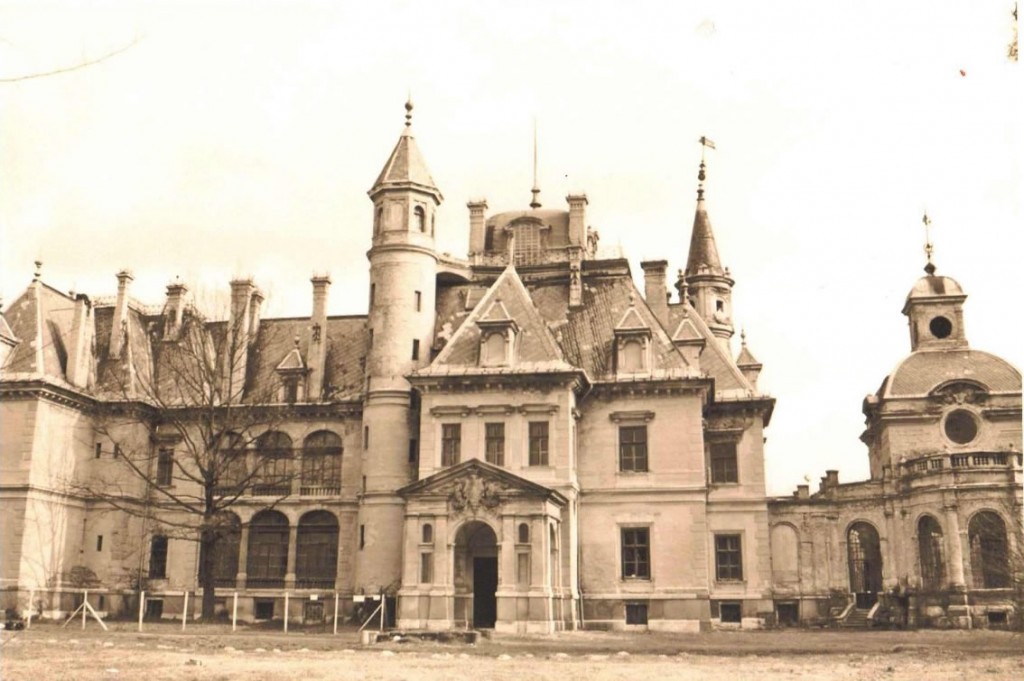 Schloss Schossberger
Posted in The Thyssen Art Macabre, Thyssen Art, Thyssen Corporate, Thyssen Family Comments Off on Back again & the story so far.
Saturday, July 23rd, 2011
| Back in June 2010 we predicted that Germany was due to be subjected to a whitewash documentary about The Thyssen Dynasty; made by Broadway TV for transmission by ARD. We hoped our prediction would be proved wrong, but not a bit of it. In fact the program was even more of a ‘hagiography’ than we had foreseen. It appeared to have been yet another attempt by ThyssenKrupp, doubtless with the assistance and encouragement of The Fritz Thyssen Stiftung, to clean-up their past, mainly by omissions rather than lies. Even the members of the Thyssen-Bornemisza main branch of the dynasty were obviously too embarrassed by the whole ghastly project to want to take part. The only exception was Francesca Habsburg who appeared in support of the accusations against Tita Cervera and charges of her responsibility for attempting to steal the family fortune and polute the Thyssens’ ‘noble’ reputation.
Meanwhile the same old historical myths were reheated and served up yet again. We were encouraged to believe that Fritz Thyssen had seen the error of his early support of Hitler and the Reich and paid a heavy price for his resistance. No mention was made concerning his tax evasion and illegal foreign currency transactions. They also claimed him to be considered a German hero for opposing the Versailles Treaty, the allied occupation of The Ruhr and the stringent reparation payments imposed by the allies. This was of course hardly something that could be considered unique. In fact Germany as a nation has been ‘somewhat remiss’ in paying their debts for either World Wars. We were also asked to believe that Fritz had really rather liked Jews and even had some as personal friends.
At the same time, Heini’s father Heinrich Thyssen-Bornemisza was treated with a great deal less generosity, presumably because, following our revelations, they were obliged to admit that throughout the war he had continued to profit from his industrial contribution in supplying armament for the Reich. It was also made to sound like an activity entirely independent of the Thyssen organisation. Predictably, no mention was made of his banking and financial contribution. They even got Federico Zichy-Thyssen to claim that his uncle’s behaviour had rubbed off on Heini and that his grand-mother had warned him ‘never to do business with Heini’. He didn’t mention that the same grandmother had joined the Nazi party three years before her husband and returned from South America after the war to take charge of the Thyssen organisation and found The Fritz Thyssen Stiftung. But he did remind us how much unhappiness his fortune had brought him and how his children constantly fought over their inheritance; which must have sounded familiar to Francesca.
Then the story moved on to the Rechnitz Massacre for which the program makers wheeled in none other than Wolfgang Benz, the retired professor of antisemitism research at Berlin University; the same Wolfgang Benz who originally reacted to my feature in FAZ by denying that the massacre had ever taken place. Making no mention of his original claim, or why he had changed his mind. In an effort to eliminate Margit Batthyany-Thyssen as a suspect he insisted that only uniformed Nazis had been involved in the massacre, though he gave no evidence to support his claim. The program even claimed that Margit hadn’t known about the massacre until she was told the following morning. Paul Gulda, of all people, then insisted that Franz Podezin, one of the main perpetrator, had only been ‘following orders’! He even mentioned the ficticious telephone call that so many apologists claim to have instructed Margit’s lover to shoot the Jews. But the fact that she had helped two of the guilty to escape justice was ignored. I was mentioned as the author of ‘The Thyssen Art Macabre’ which was dismissed by the program as being inaccurate and disregarded by ‘experts’. They also claimed that I had accused Margit of actually shooting some of the victims of the massacre herself, which I didn’t, despite being quite convinced she did, but unable to prove such an accusation. They insisted it was not a book that should be taken seriously, without giving any reason why they were mentioning it in the first place.
Broadview TV then moved on to more recent times by claiming that Heini, who Simon de Pury described as the best collector of his time, had ‘donated’ his art collection to Spain, while Francesca insisted that the only reason why the Bermudan court case had collapsed was because his children had withdrawn all charges so that their father could die a happy man, despite Tita’s attempts to get her hands on all his money.
Finally the program makers brought ThyssenKrupp back into focus by getting its long-time Chief Executive Dieter Spethmann to say what a deeply wonderful company it was and how much it had contributed to Germany’s wealth, well-being and economic miracle. Since the documentary was shown, the company has announced plans to cut its global workforce by some 25% and admitted that the recent sale of shares was an effort to reduce its enormous debts.
It is doubtfull that even such a misleading documentary could have any effect on the fortunes of ThyssenKrupp or the Thyssen families (either Zichy or Bornemisza) but if the program had been more accurate and less misleading at least, ThyssenKrupp, The Fritz Thyssen Stiftung, ARD and Germany’s academia may have retained some degree of credibility. |
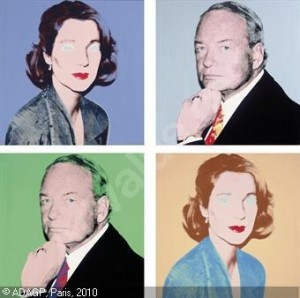 Portraits of Elisabeth and Dieter Spethmann by Warhol. |
Tags: ARD, Berlin University, Broadway TV, Dieter Spethmann, Federico Zichy-Thyssen, Francesca Habsburg, Franz Podezin, Fritz Thyssen, Fritz Thyssen Stiftung, Heinrich Thyssen-Bornemisza, Margit Batthyany-Thyssen, Paul Gulda, Rechnitz Massacre, Simon de Pury, ThyssenKrupp, Tita Cervera, Wolfgang Benz
Posted in The Thyssen Art Macabre, Thyssen Art, Thyssen Corporate, Thyssen Family Comments Off on The Thyssen Dynasty – “As seen on TV”
Monday, March 21st, 2011
| At 17:00 hours on Sunday, 20 March 2011, one week before the sixty-sixth anniversary of the massacre of 180 Jewish slave workers by guests at a party given by Margit Thyssen-Bornemisza, I received a telephone call.
The caller, a resident of Rechnitz, informed me that the location of the victims´ burial was ´to the left (north-east) of the town´s Catholic cemetery´.
Apparently, after the war, following the relocation of the military war heroes cemetery, a decision was made to refill their empty, unmarked graves with the remains of the Jewish victims. The decision had been made by the local authorities who had arranged for the temporary release from jail of Hildegard Stadler, one of the perpetrators of the atrocity, who then led them to the site of the original burial.
Despite previous denials, it now seems reasonable to assume that the local authorities, the Austrian Ministry of the Interior, some members of the Thyssen-Bornemisza and Batthyany families and many residents of Rechnitz have always been aware of these facts.
If the residents of Rechnitz are now admitting the truth, hopefully the Austrian authorities and the two families involved will follow their example.
+ + + + + + + + +
Um 17 Uhr am Sonntag, 20. März 2011, eine Woche vor dem 66. Jahrestag des Massakers an 180 jüdischen Zwangsarbeitern während eines von Margit Thyssen-Bornemisza gegebenen Festes, bekam ich einen Telefonanruf.
Der Anrufer, ein Einwohner von Rechnitz, teilte mir mit, dass die Grabstelle der Opfer sich ´links (nord-östlich) vom katholischen Friedhof´ befinde.
Anscheinend wurde nach dem Krieg, nach der Überführung des Heldenfriedhofs, die Entscheidung getroffen, dessen leere, unmarkierte Gräber mit den Überresten der jüdischen Opfer aufzufüllen. Die Entscheidung wurde durch die örtlichen Behörden getätigt, die kurzzeitig Hildegard Stadler, eine der Akteure des Massakers, auf freien Boden setzten, um von ihr zur ursprünglichen Grabstelle geführt zu werden.
Trotz bisheriger Leugnungen scheint es also, als dürfe man annehmen, dass die örtlichen Behörden, das österreichische Innenministerium, manche Mitglieder der Familien Thyssen-Bornemisza und Batthyany und viele Einwohner von Rechnitz sich dieser Fakten schon immer bewusst waren.
Wenn die Einwohner von Rechnitz nunmehr die Wahrheit zugeben, dann werden die österreichischen Behörden und die beiden Familien hoffentlich ihrem Beispiel folgen.
+ + +
Kommentar am 23.03.2011 von Herrn Dieter Szorger, Abteilung 7 – Kultur, Wissenschaft, Bildung – Burgenländische Landesregierung, A-Eisenstadt:
Sehr geehrter Herr Litchfield
Ich würde mir wünschen, dass die im Artikel skizzierten Fakten stimmen und dass das Grab endgültig gefunden wird. Vielleicht sogar im Zuge der Grabungsarbeiten, die am Gelände um den Kreuzstadl in den nächsten Monaten starten werden, wenn das Open-Air-Museum des Vereins Refugius eröffnet wird.
Bezüglich des Wahrheitsgehalts der oben skizzierten These bin ich aber eher skeptisch, muss aber zugeben, dass ich die örtlichen Rahmenbedingungen dafür zu wenig kenne.
Comment on 23.03.2011 by Mr Dieter Szorger, Department 7 – Culture, Science, Education – Burgenland County Government, A-Eisenstadt:
Dear Mr Litchfield
I would hope that the facts sketched in the article were true and that the grave can finally be found. Perhaps even during the excavations, which will begin within the next few months in the area around Kreuzstadl, when the open air museum of the Refugius society will be opened.
As to whether the above sketched thesis contains any truth, I remain somewhat sceptical, although I have to admit to not being familiar enough with the specific local conditions.
Further comments:
Silvia Hl, Madrid: ´Hopefully the massacred Jewish will find justice after all. Hopefully the assassins will also find themselves in front of that same justice.´
Eva Dabara, Tel Aviv: ´Startling, staggering story you´ve brought here, David´.
Michel van Rijn, Western Cape: ´Great work, David. What a story!´ |
 |
Tags: Austrian Ministry of the Interior, Batthyany, Burgenland County Government, Burgenländische Landesregierung, Dieter Szorger, Eisenstadt, Heldenfriedhof, Hildegard Stadler, Jewish slave workers, jüdische Zwangsarbeiter, katholischer Friedhof Rechnitz, Margit Thyssen-Bornemisza, military war heroes cemetery, österreichisches Innenministerium, Rechnitz Catholic cemetery, Rechnitz Massacre
Posted in The Thyssen Art Macabre, Thyssen Corporate, Thyssen Family Comments Off on + + + + + RECHNITZ MASSACRE BURIAL SITE FINALLY REVEALED + + + + + GRABSTELLE DES MASSAKERS VON RECHNITZ ENDLICH PREISGEGEBEN + + +
Monday, June 21st, 2010
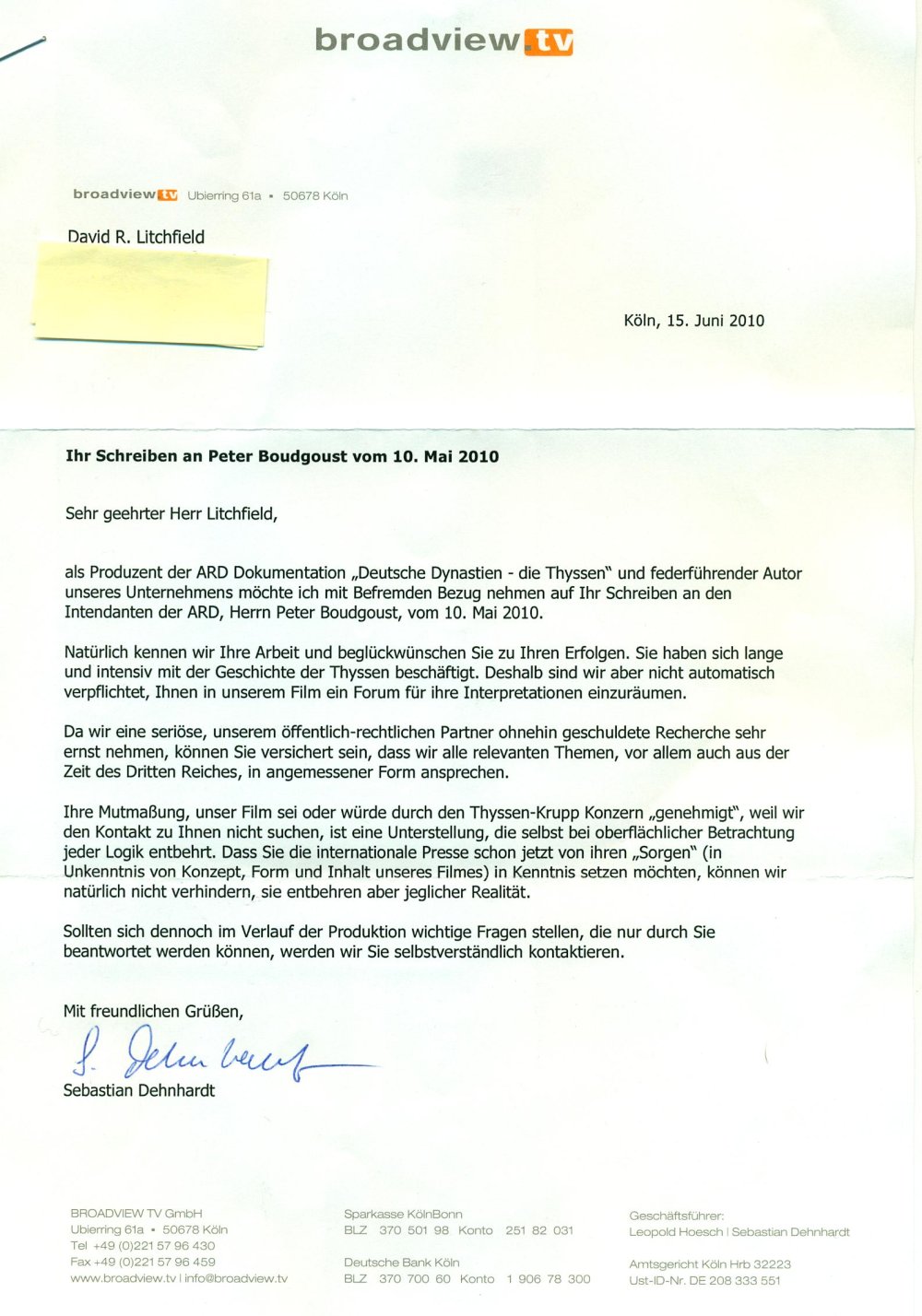
| Back in February we learned that Broadview TV in Cologne was producing a documentary on the Thyssens to be shown on German television (ARD channel) later this year as part of their ‘German Dynasties’ series. This was interesting news, as we knew that for several years such a venture has been planned in Germany but had so far failed to materialise.Following the publication of our book, a major rewriting of the family and corporate history was initiated, co-sponsored by the Thyssen corporation (via Fritz Thyssen Foundation) and the Thyssen family (represented by Georg Thyssen-Bornemisza). Now Broadview TV was announcing that their film (see this Scanned Document) would feature ‘August, Fritz and Heini Thyssen’, making no mention of either Heini’s father Heinrich Thyssen-Bornemisza, a key figure of the story whose role we have researched and reported extensively, or Fritz’s wife Amelie, who was a committed Nazi, yet regained ownership and control of the corporation after Fritz’s death in Argentina (not in Germany) in 1951, while never publicly recanting her political beliefs.
Instead, Broadview TV announced that their emphasis would be on ‘Fritz Thyssen’s TRAGIC embroilment with the Third Reich’ as well as ‘the patron of the arts Hans Heinrich Thyssen-Bornemisza’.
For a brief moment we paused to think what Heinrich and Heini Thyssen, who had spent most of their lives aggressively denying their Germanness, would think about being turned back into ‘Germans’ posthumously! And hadn’t Fritz and Amelie always insisted they were stateless? In my opinion as a German it is wrong for the German public to be asked to accept this family back into their national consciousness as one of their own, without being given the chance of seeing an unbiased picture of BOTH their achievements AND their failings.
We are not in any way denying the Thyssens’ achievements. They created a vast industrial empire, thousands of jobs and careers as well as wealth for the German nation and beyond. To be more precise, August and his brother Josef did those things, as well as their workers, foremen and managers. But Fritz (& Amelie) and Heinrich Thyssen were big cogs, very big cogs indeed in the process that brought Adolf Hitler to power. As such, the Thyssens’ ‘embroilment’ with the Nazis was NOT, I repeat NOT tragic for the Thyssens. The Thyssens were not victims. They were perpetrators. They supported the Nazis because they wished to eradicate Communism and Socialism and ensure their own profits and lifestyles.
The actual tragedy was the one that befell the people of Europe and of the wider world who died in their millions or survived to live on with their haunting memories. More often than not they were offered no support to come to terms with their experiences, while the Thyssens were allowed back into the position of role models. Now they’re reintroduced into the German media and, in our opinion, instead of owning up fully to their historic role, commission sanitised reports which airbrush inconvenient truths out of the public picture. This is evident in recent publications where embarrassing facts were circumvented or ignored.
We decided to contact Mr Dehnhardt to try and find out what kind of course he was planning to take with his documentary. Having written to him early in February we heard nothing. So we wrote to the Head of ARD, Mr Peter Boudgoust. He wrote back a very nice letter, saying he had passed our concerns on to the commissioning editors, in this case Christiane Hinz at WDR in Cologne. But we heard nothing from Mrs Hinz, even when emailing and phoning her.
Finally, after another letter to Mr Boudgoust, Mrs Hinz replied. She suggested our worries were ‘unfounded’, that the ‘POSSIBLE film about the Thyssens’ was still ‘ONLY AT A PROJECT STAGE’, that ‘all relevant historical points’ would be researched and that ‘if any questions arose that only [we] could answer’ they would ‘of course’ contact us. No apology was made for her previous silence.
Now finally – after 4.5 months – Mr Dehnhardt too has chosen to communicate with us, though rather pointedly, he has addressed his reply (see enclosed) to David only, not to myself, his German kinswoman, although our letter came from both of us. Once again, like Mrs Hinz before him, Mr Dehnhardt points out that ‘all relevant themes, including those from the time of the Third Reich’ will be dealt with, but adds ‘you have no right to expect for the interpretations derived from your research to be given an automatic platform in our programme’. He also bemoans our sceptical approach, stating that it is ‘devoid of any reality’, particularly in view of the fact we ‘know nothing about the concept, form and content of [his] film’. Meanwhile, however, he still fails to communicate any of the concept, form and content in the professional manner that we would expect.
The word ‘interpretation’, of course, is a very interesting choice in this context, as it carries all the connotations of ‘spin’. The fact is that if you leave Heinrich Thyssen-Bornemisza and Amelie Thyssen out of the picture, you refuse to deal with real historical issues, namely those of managing German companies throughout the war from a Swiss safehaven, including the use of slave labour, international Nazi banking, the Rechnitz Massacre, the Thyssens’ post-war protection from Allied retribution, etc, etc, etc. These are straightforward facts; not ‘interpretations’.
Mr Dehnhardt has been criticised in the past for producing a documentary in which the views were said to have been over-emotional and unbalanced. Kultura Online Magazin found that his film on the battle of Stalingrad did not give a voice to the Russian side and only described the results but not the reasons for the historic developments in question. When confronted with this criticism, Mr Dehnhardt replied: ‘I think the individual [German] soldier also has the right to be a victim, especially in the context of Stalingrad. My film shows that he was only a small cog in a big machine’.
Here Mr Dehnhadt is right. But this statement begs the question as to how he will deal with the ‘big cogs’ when it comes to his documentary on the Thyssens. Will he still have the likes of his father (or my father and uncles for that matter) in mind or will he now bow to the power and influence of the cosmopolitan ‘big cogs’? Will he tell the German public the tale of Fritz Thyssen suffering in a concentration camp, although we established he was under comfortable, protective custody while his brother Heinrich continued to supply the Nazis with coal, submarines and aerial torpedoes from the safety of Switzerland? And will he tell people what an art expert Heini Thyssen was when we showed that Heini Thyssen himself told us his father had bought the collection simply in order to transfer money out of Germany and Thyssen art has been used and abused as a convenient veneer behind which to hide a guilty past ever since?
We shall have to wait and see. But after our experiences of looking into all things Thyssen for over fourteen years, we remain sceptical, particularly since Mr Dehnhardt makes several films on different subjects every year. In this short space of time he could not possibly have enough insight into a vast topic such as Thyssen to offer anything but a simplified view. A view that is in danger of misrepresenting the past in a way that will once again allow the Thyssen big cogs to indulge their privileges while shunning their historic responsibilities.
We really hope to be proved wrong, because for the last seventy plus years the German public has been misinformed regarding Thyssen. We believe that while they may not like the image of the Thyssens that we have revealed, it is up to them, not to what might prove to be a Thyssen-influenced media company, to decide.
The programme was finally aired on 8 November 2010.
COMMENTS:
eldeadpixel writes: Thanks for this good article. I wonder if that documentary will be shown here in Spain… Keep us up to date! |
 Sebastian Dehnhardt, film producer and managing director of Broadview TV, Cologne 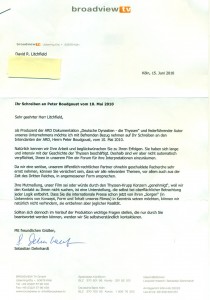 Four and a half months for a reply - And they call us 'illogical'... |
Tags: Adolf Hitler, Amelie Thyssen, ARD, Argentina, Broadview TV, Christiane Hinz, Communism, Fritz Thyssen, Fritz Thyssen Foundation, Georg Thyssen-Bornemisza, Heinrich Thyssen-Bornemisza, Kultura Online Magazine, Nazi Banking, Peter Boudgoust, Rechnitz Massacre, Sebastian Dehnhardt, slave labour, Socialism, Stalingrad, Switzerland, WDR
Posted in The Thyssen Art Macabre, Thyssen Art, Thyssen Corporate, Thyssen Family Comments Off on Is B r o a d v i e w TV’s Sebastian Dehnhardt helping the Thyssens to white-wash their history? (by Caroline Schmitz)
Monday, May 17th, 2010
El Mundo has claimed Tita (Cervera Thyssen) privately admitted she used her son Borja’s sperm to impregnate the Los Angeles based surrogate mother of her twin girls. Such things are illegal in Spain but apparently not in California, where, particularly in the City of Angels, they have yet to sanction topless bathing but seem OK with technical incest. Assuming both Tita and El Mundo are telling the truth, what do you think? Either morally, religiously or as the source of a plot for a new Almodovar movie, I would really appreciate your comments, particularly from Spain and LA.
(For the English translation of the El Mundo article, click here: 100515ElMundoTwinPeaks).
 Tita Thyssen (photo: El Pais, Spain) Silvia Hl from Spain writes: ‘La sola imagen del tinglado es digna de la más sórdida historia del pueblo profundo. Y se hacen llamar aristocracia. Sea verdad o mentira, es asqueroso. Endogámicos pervertidos! The sole image of the makings makes one think of sordid, weird peoples from other ages. It is a real shame that Spain has to deal with guys like these. As for LA and USA, hypocrites!’
Michael Hecht in London says: ‘Spooky’.
Marta Cibelina blogs: ‘In Spain, it is forbidden to reveal the identity of a sperm donor and not permitted for a woman over 60 to adopt a child. In Spain, it is also illegal to use surrogate mothers to conceive. The story of Tita’s adoption therefore provokes a sick feeling in people. The best one/she could do is to keep quiet about it all. But today, I heard her on a programme saying ‘of course I know who the biological father of my twins is’. Yet, the logical thing would be for her not to know and if she does, it’s something that only concerns her daughters and nobody else. In Spain, we have different values and laws concerning adoption and in vitro fertilisation. For better or worse, these girls will be raised in our country and in our culture’.
Jonathan VS in Spain twitters: ‘The Jet-Set is like that…..What the hell….’.
petitemaoiste twitters: #novelendogamy #inbredaristocrats #aristocratasdegenerados
jarais in Boston twitters: Squicky rumors from Spanish jet set that baronesa thyssen’s rent-a-womb twins fathered by her grown son #toomuchmoney #thosepoorkids #rentawombnightmare
Carlos, the Spanish barman at the Cowes Corinthian Yacht Club says: ‘This reminds me of the Woody Allen syndrome’. (For those who don’t remember: Woody left his wife to pursue a relationship with their adopted daughter).
JotaInKoelle says: ‘Yo mientras no lo use para cocinar no me sorprendo de nada’.
Tags: Almodovar, aristocrats, Borja, California, Cervera, City of Angels, El Mundo, endogamy, incest, jet set, Los Angeles, Marta Cibelina, Spain, Thyssen, Tita, Woody Allen
Posted in The Thyssen Art Macabre, Thyssen Family Comments Off on Incest?
Monday, May 3rd, 2010
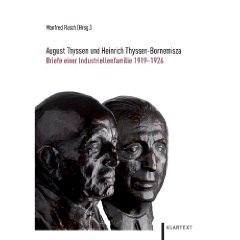
| Quite why ThyssenKrupp have waited so long to authorise their archivist and historian, Manfred Rasch, to bring out a book of letters between August Thyssen and his son Heinrich, seems somewhat of a mystery. The two men have, after all, been dead for 84 and 63 years respectively. But the professor appears to confirm my belief that this is part of the corporate and family response to my book, by including a rather bizarre statement amongst the credits, which runs thus (page 10):
‘People who are less interested in historically substantiated studies with traceable references and who would rather form their opinions based on sex-and-crime journalism might be entertained by Litchfield, David: The Thyssen Art Macabre, London 2006 (German edition: Die Thyssen-Dynastie, Die Wahrheit hinter dem Mythos, Oberhausen 2008).’
I feel such a statement says more about Rasch than it does about me, and I appreciate the publicity it has afforded my book, including the increase in visits to this website, particularly from the Ruhr district. However, a recent critical review awarded Rasch’s book on Amazon by a reader in Munich might have been unlikely to have imbued him with a similar spirit of generosity:
‘Unfortunately, the title of this book is somewhat misleading, as of the 214 letters only 4 are by Heinrich Thyssen’s hand. It also does not limit the scope of its contents to the years 1919-1926 but includes furthermore a considerable amount of historical material on the history of the Thyssen family and its industries which has been written by Professor Manfred Rasch who is listed as editor of the book. As Professor Rasch is also the head of the archives at ThyssenKrupp, it makes it difficult to accept the impartiality of his views. The style of the book is academic and thus requires an overwhelming interest in the subject matter, as much is being taken up with supportive material in the form of bibliography, sources, commentaries etc.
One also gets the impression that this book, despite its size and the obvious complexity of the research, was in fact created in some haste, as on far too many occasions it sidesteps various historical issues by announcing that scientific research is still ongoing. But what I find even more surprising is the way Prof. Rasch deals with other authors, some of whom have published considerable research about the subject, for instance the Briton David R L Litchfield (‘The Thyssen Art Macabre’, in German: ‘Die Thyssen-Dynastie’), whose description of the murder of 180 Hungarian slave labourers during a party organised at Rechnitz Castle by Margit Thyssen-Bornemisza caused a big stir a few years ago. Prof. Rasch suggests that his readers should view Litchfield’s book as mere entertainment: just an alarming error of judgement or a worrying example of professional jealousy?
This is particularly disturbing in the light of the anti-Semitism in the Thyssen family (see letters dated 9.9.1919, 21.7.1923 and 30.7.1923) which the book presents to the interested public. All in all, however, this is a fascinating read which contains much material of interest to both amateur and professional historians’.
One certainly gets the impression that the corporation may now be trying somewhat too hard to paper over the cracks in their historiography. You may no longer be able to see the cracks but you can certainly see where they have been, which only serves to draw attention to the papering.
I was also particularly interested in the impression that ThyssenKrupp is now giving of having archives that are open to the public. This was certainly not the case when we were researching our book. In fact quite the opposite. However, Rasch still seems determined to believe that, having been denied access to his archives, we chose to create our book without documentary evidence. This is of course totally and completely inaccurate and an opinion that appears to have been based on his wishful thinking.
Apart from the fact that our book is most certainly based on fully documented evidence, Rasch, who is obviously holding me responsible for the cracks in his professional credibility, would perhaps have been better advised not to talk of ‘entertainment’ in connection with a family that was responsible for the financing and use of slave labour, in particular (but not exclusively) in the context of the Rechnitz massacre (which Rasch chooses to ignore, apart from providing a link to an Austrian website).
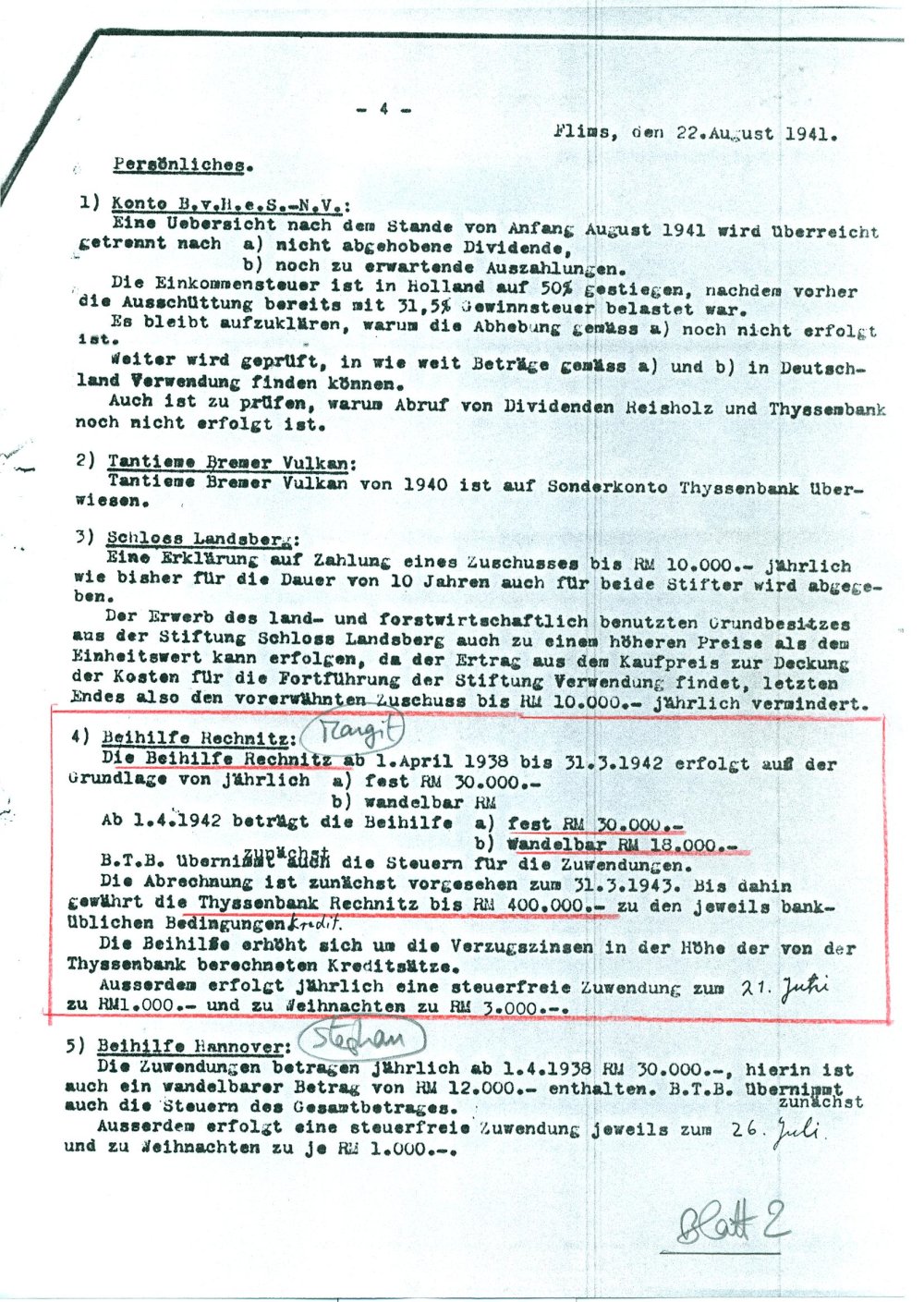
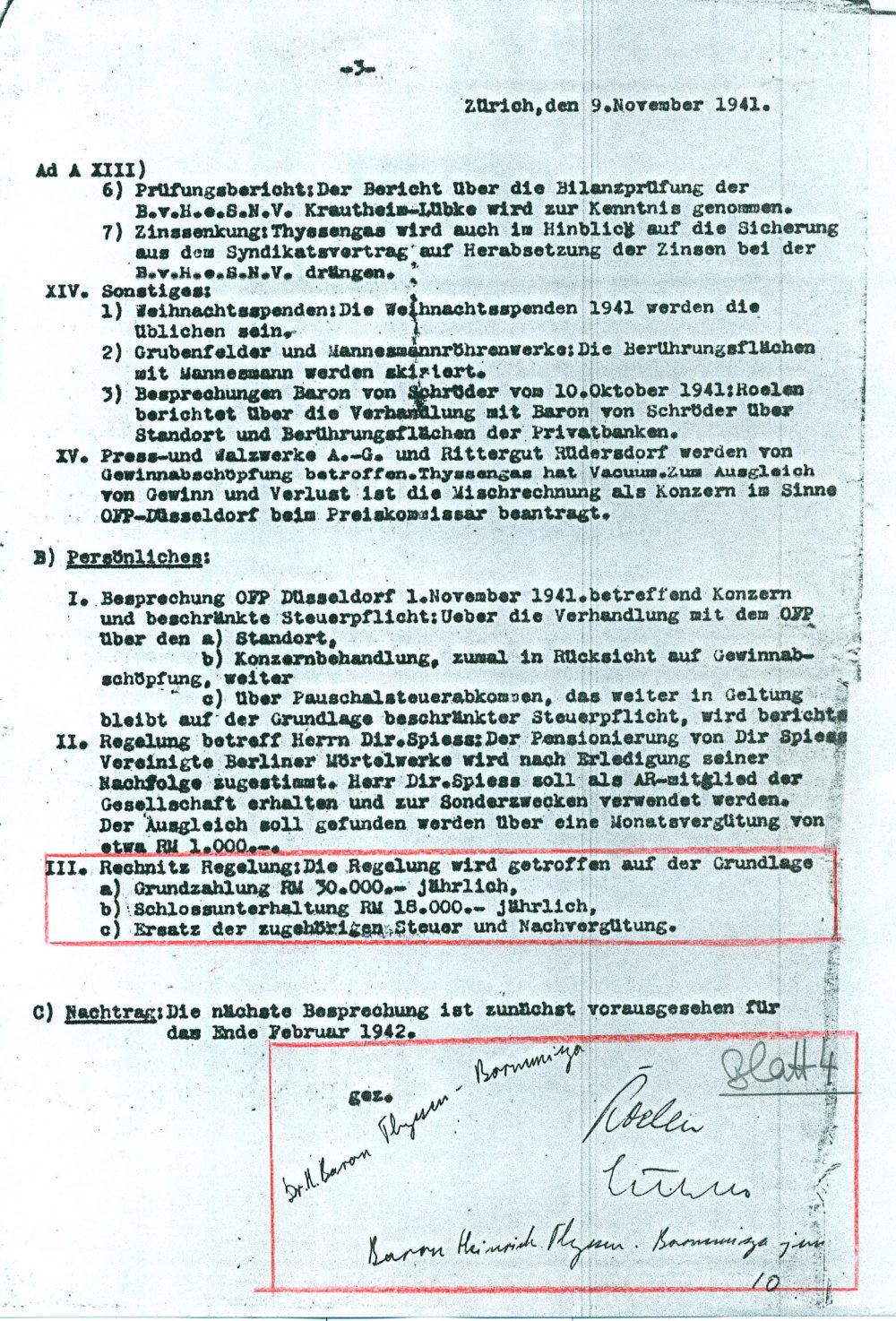
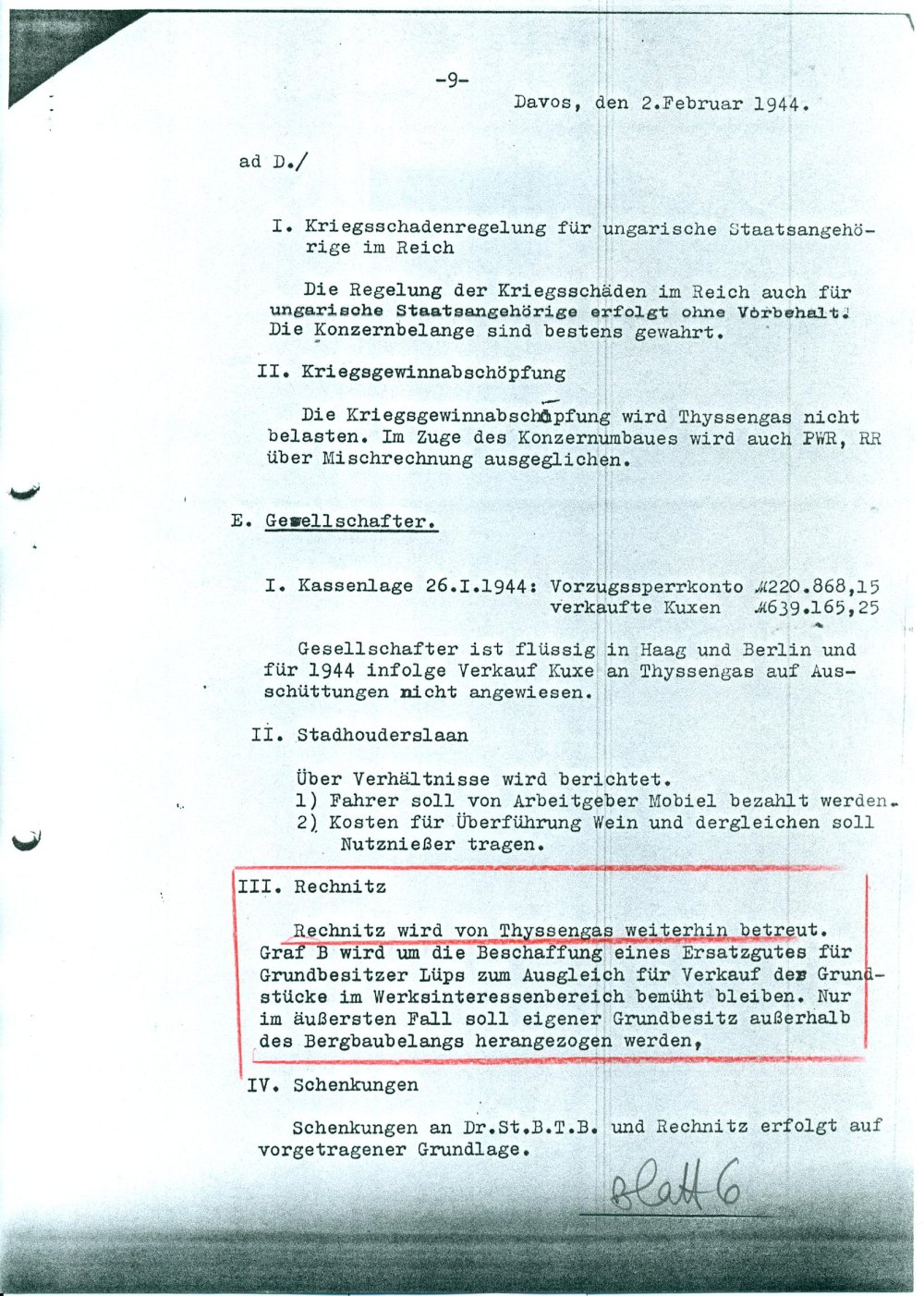
To assist Manfred Rasch with future editions of his book, I include in this post excerpts of documents confirming the Thyssens’ war-time financing of their SS-occupied castle in Rechnitz, documents which I can only assume he overlooked in his haste to publish his book. They concern meetings of Heinrich and his son Hans Heinrich Thyssen-Bornemisza (‘Heini’) with their managers Heinrich Lübke and Wilhelm Roelen on 22 August 1941 in Flims, on 9 November 1941 in Zurich and on 2 February 1944 in Davos and include details of the RM 400,000 loan from August Thyssen Bank Berlin to Rechnitz, yearly contributions of RM 30,000 for Margit Batthyany and RM 18,000 for the upkeep of the castle, as well as a notification that Thyssengas (then Thyssensche Gas- und Wasserwerke) was generally ‘looking after’ Rechnitz.
Scanned Document
Scanned Document-1
Scanned Document-2
(all excerpts of documents in this post are from the archives of David R L Litchfield and are to be reproduced with his permission only). |
 ThyssenKrupp's historian and archivist Prof. Manfred Rasch 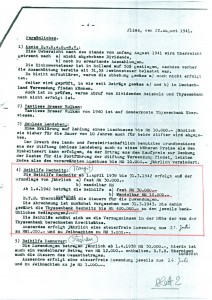 Documents substantiating Thyssen funding of Rechnitz castle during the second World War (Archives of David R L Litchfield, not to be reproduced without permission) 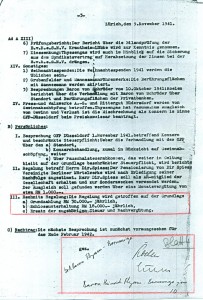 Documents substantiating Thyssen funding of Rechnitz castle during the second World War (Archives of David R L Litchfield, not to be reproduced without permission) 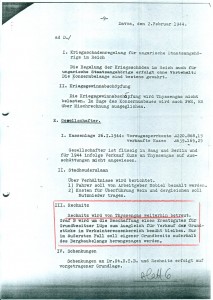 Documents substantiating Thyssen funding of Rechnitz castle during the second World War (Archives of David R L Litchfield, not to be reproduced without permission) |
|
Tags: Amazon, anti-Semitism, archives, August Thyssen, August Thyssen Bank, Berlin, bibliography, Davos, Flims, Heinrich Lübke, Heinrich Thyssen-Bornemisza, historiography, Manfred Rasch, Margit Batthyany, Rechnitz, Ruhr, slave labour, sources, Thyssengas, ThyssenKrupp, Thyssensche Gas- und Wasserwerke, Wilhelm Roelen, Zurich
Posted in The Thyssen Art Macabre, Thyssen Corporate, Thyssen Family Comments Off on What have ThyssenKrupp’s historians been doing all this time?
Tuesday, April 27th, 2010
| Aus dem DIG Magazin (1/2010), Seite 29:
‘Adel verpflichtet. So sagt das Sprichwort. Aber wozu verpflichtet Adel?
Der Brite David Litchfield bekam durch seine Bekanntschaft zu ‘Heini’ Thyssen Einblicke in die Unterlagen der Familie Thyssen.
Heinrich Thyssen-Bornemisza wurde 1921 als Sohn des gleichnamigen Vaters geboren. Sein Onkel Fritz hatte Anfang der dreissiger Jahre eine unrühmliche Rolle bei der Machtergreifung Hitlers gespielt und die Gunst der Stunde genutzt, um sich und seine Familie kräftig zu bereichern. Der “Führer” belohnte den Grossindustriellen mit einem Sitz im Reichstag. Schon 1934 kam es zu Spannungen zwischen Thyssen und Hitler, 1939 gar zum Bruch. Trotz seiner Flucht wurden die Nazis seiner habhaft und verschleppten ihn ins KZ. Hermann Göring hielt indes seine schützende Hand über Fritz Thyssen.
Gleichwohl machte die Familie Thyssen glänzende Geschäfte im Krieg. ‘Heini’ Thyssen, ein gut aussehender Jüngling, erlebte erste Liebschaften und rettete sich in die Schweiz. In den Alpen verlebte er den Krieg.
Untrennbar mit dem Namen Thyssen verbunden ist ein Massaker in Rechnitz. Kurz vor dem Einmarsch der Roten Armee veranstaltete Gräfin Batthyany, eine geborene Thyssen, eine Sause auf ihrem Schloss mit hochrangigen Nazis und SS-Offizieren. Die betrunkenen Anwesenden machten sich einen Spass daraus, etwa 200 Juden abzuschlachten. Muss erwähnt werden, dass die adeligen Gastgeber für dieses Verbrechen nie juristisch belangt wurden?
‘Heini’ Thyssen folgte seinem Vater als Chef des Hauses. Mit seinen Geschwistern lieferte er sich einen heftigen Erbstreit um die Macht. Es folgten Jahre als Playboy: Geld, Macht, Liebe.
Das Buch ist gut geschrieben. Dort, wo Aussagen der Familienmitglieder nicht durch Quellen belegt sind, hinterfragt Litchfield diese Aussagen. Er beleuchtet das Treiben einer Familie, in der Geld alles ist.
Wozu Adel verpflichtet, weiss ich nach der Lektüre des Buches immer noch nicht, aber das Treiben der Familie Thyssen erinnert an etwas anderes: Geschichte verpflichtet. Nämlich zur Verantwortung.’
(Deutsch-Israelische Gesellschaft, Magazin 1/2010, Rezensionen, s. 29/30, Dr Norbert Korfmacher, ‘Eine Unternehmensgeschichte: Die Thyssen-Dynastie’).
http://www.deutsch-israelische-gesellschaft.de/
http://www.bamby.de/mylife.htm |
 |
Tags: Adel verpflichtet, David Litchfield, Deutsch-Israelische Gesellschaft, Die Thyssen-Dynastie, Dr Norbert Korfmacher, Fritz Thyssen, Geschichte, Gräfin Batthyany, Heini Thyssen, Heinrich Thyssen-Bornemisza, Hermann Göring, Rechnitz, Reichstag, Schweiz, Unternehmensgeschichte, Verantwortung
Posted in The Thyssen Art Macabre, Thyssen Family Comments Off on Dr Norbert Korfmacher Rezensiert ‘Die Thyssen-Dynastie’ (assoVerlag, Oberhausen/Ruhr) für die Deutsch-Israelische Gesellschaft
Thursday, March 4th, 2010
| Dear Manfred Rasch (‘Ueberspieler’, ThyssenKrupp Smoke and Mirrors Department),
Congratulations on your latest literary output, but I am confused. When we came to see you in November 1998, you told me that the letters between August Thyssen and his son Heinrich Thyssen-Bornemisza were Baron Heini Thyssen’s private property.
You also told us: ‘We are not a service organisation for the Thyssen family. We are the archive of a company or companies, and have nothing to do with the Thyssen-Bornemisza family.’ Were you lying or has something changed? So: Who owns the copyright to your book and/or to the letters? All very mysterious!
I am certainly looking forward to receiving a copy of the book, not so much because of what it will contain, but what it doesn’t. Fortunately, as we also have copies of all the letters, which were given to us by Heini Thyssen, we can fill in any gaps you might inadvertently have left. We hope nobody has been tempted to forge any additions, as you once accused us of doing.
I have to say that I find the fact that you, and presumably ‘the organisation’, are choosing to do such a book, while ThyssenKrupp is the subject of ‘independent’ academic research, deeply suspicious. Why do I get the feeling that it is all part of the re-writing of corporate and family history in response to the publication of our book ‘Die Thyssen-Dynastie. Die Wahrheit hinter dem Mythos’ (assoVerlag Oberhausen, 2008)? |
 |
Tags: assoVerlag, August Thyssen, Heini Thyssen, Heinrich Thyssen-Bornemisza, Manfred Rasch, Oberhausen, ThyssenKrupp
Posted in The Thyssen Art Macabre, Thyssen Corporate, Thyssen Family Comments Off on Private Enterprise?
Sunday, February 28th, 2010
The following is my exchange with Alexander Batthyany on the forum of ‘Das Magazin’ in Zurich during the month of February 2010. My latest entry was not accepted by the magazine’s forum (as of 24 June 2010, we notice that the Batthyany family have now made an entry concerning the Rechnitz Massacre on their website and that Das Magazin have also now included our criticism of the Batthyanys’ original lack of comment in their discussion forum):
End of February 2010: David Litchfield to Alexander Batthyany (unpublished by forum):
Bitte entschuldigen Sie die Verspätung meiner Antwort, aber ich musste erst noch ein Buch fertig schreiben, welches sich wiederum mit einer eminenten Familie beschäftigt, die ihre faschistische Vergangenheit verleugnet – diesmal eine englische Familie.
Was die deutschsprachige Bevölkerung angeht, so ist es meine Ueberzeugung, dass das einzige was ‘selbstverständlich’ ist, bzw. wobei keine Gefahr des ‘Missverstehens’ besteht, die Tatsache ist, dass viele Deutsche und Oesterreicher weiterhin glauben, dass es den Juden recht geschah und dass keinerlei Reue gezeigt wird, sondern im Gegenteil die Gelegenheit – falls gegeben – willkommen geheissen würde, das Gleiche morgen wieder zu verbrechen. Dies ist leider meine Sicht, die ich aus persönlicher Erfahrung gewinnen musste. Uebrigens wurde sie auch von Margit Batthyany’s Bruder Heini Thyssen mit mir geteilt.
Ich denke, es ist auch bemerkenswert, dass Sie die Thyssen Familie nicht erwähnen, deren Giftbecher Ihre Familie gern in Empfang nahm, wofür die Einwohner von Rechnitz bis heute bezahlen müssen.
Während ich akzeptiere, dass Sie persönlich das Massaker bedauern, die Opfer beklagen und mit ihren Familien trauern, so vermittelte mir Sacha Batthyany andererseits mündlich – im Gegensatz zu seinen gedruckten Aeusserungen – den Eindruck, dass Sie wohl die Ausnahme und nicht die Norm innerhalb des Batthyany Clans darstellen.
Sollte Ihnen daran gelegen sein, die Position Ihrer Familie in direkterer Weise aufzustellen, warum probieren Sie nicht, einen diesbezüglichen Beitrag auf www.batthyany.at freizuschalten, der Ihre Sympathie für die Opfer und Ihr Bedauern ob des Rechnitzer Massakers widerspiegelt, und eine Einladung an andere Mitglieder Ihrer Familie enthält, diese Haltung öffentlich zu unterstützen?
An Ihrer Stelle würde ich allerdings bei dieser Aktion lieber nicht die Luft anhalten. Wie Sie vielleicht wissen, enthält die Batthyany Webseite bisher keine einzige selbständige Information zum Thema Rechnitz.
Mid-February 2010: Alexander Batthyany to David Litchfield on ‘Das Magazin’ forum:
Manche Dinge sollten so selbstverständlich sein, dass sie zu erwähnen nicht mehr notwendig sein müsste. Aber da man das Selbstverständliche dann eben doch noch ausformulieren muss: Ich bedauere die 180 Opfer des Massakers ebenso wie ihre Angehörigen und Nachkommen.
Möglicherweise war mein Schreiben missverständlich formuliert, und wenn dem so sein sollte, will ich das gerne korrigieren: ich wollte primär zum Ausdruck bringen, dass Fragen der Schuld (der eigenen wie der innerhalb einer Familie) als existentielle Fragen individuell zu beantworten sind. Da ich ein Mitglied dieser Familie bin und einige der Beitragenden hier den Eindruck äusserten, dies sei eine Stellungnahme “für die Familie” wollte ich daher auf diesen einen Punkt gesondert hinweisen.
Ich beschäftige mich bereits lange genug mit diesem Thema – daher habe ich als gegeben vorausgesetzt, was ohnedies keine Frage mehr sein sollte: das Bedauern, bzw. die Sympathie mit den Ermordeten. Aus eben diesem Grund schrieb ich ja auch von Schuld und Verantwortung.
Mid-February 2010: David Litchfield to Alexander Batthyany on ‘Das Magazin’ forum:
Ich habe Ihren Beitrag immer wieder durchgelesen, kann aber leider nirgends einen Ausdruck Ihrer Sympathie für die 180 jüdischen Menschen entdecken, die in dieser Nacht getötet wurden; oder Ihres Bedauerns ob der grausamen Tat.
Ihre einzige Sorge scheint dem Ruf Ihrer Familie zu gelten.
Ich schliesse meine Beweisführung ab.
End Jan./Beg. Feb. 2010: Alexander Batthyany on ‘Das Magazin’ forum:
Das ist ein hervorragender Artikel, von dem ich viel gelernt habe. Was mir allerdings nicht eingeht, und was mir auch unter rein pragmatischen Gesichtspunkten kaum haltbar erscheint, ist die in manchen Kommentaren anklingende Meinung, dieser Artikel sei “für die Familie” geschrieben worden. Scheinbar gehen jene, die dies annehmen, davon aus, dass die Familie (oder auch nur irgendeine andere Familie) eine geschlossene Gruppe darstelle, die einen der ihren losschickt, um für sie zu sprechen oder zu schreiben.
Das liest sich als Idee vielleicht gut, ist aber kaum praktikabel: und das kann sich wohl jeder vor Augen führen, der den Versuch unternehmen wird, für seine eigene Familie zu sprechen oder einen Artikel zu veröffentlichen; und das Scheitern dieses Versuchs wird dann hoffentlich zeigen, wie unwahrscheinlich es ist, dass dies in einer doch recht grossen Familie wie der unserigen geschehen soll. Im Übrigen halte ich dies – neben der wie gesagt fehlenden Umsetzbarkeit eines solchen Unterfangens – auch für eine bedenkliche Modellierung der Familie als “Sippe”, die geschlossen für die Meinung und Reflexionen eines Einzelnen einstehe und umgekehrt. Bedenklich ist dies deswegen, weil das ein Bild ist, das üblicherweise nicht zuletzt eben jene zeichneten, über deren Verbrechen wir hier diskutieren und für deren Ideologie vermutlich keiner der hier Diskutierenden nur die geringste Sympathie empfindet. Darin dürften sich – über alle anderen Meinungsunterschiede hinweg – alle hier Diskutierenden in Konsens befinden.
Was ich eigentlich sagen will – und was meiner Lesart zufolge auch Sacha Batthyány nicht anders sieht und in einem in meinen Augen sehr gelungenen Text zum Ausdruck bringt: Am Ende steht jeder, der in seiner Verwandtschaft einen solchen “Fall” zu beklagen hat, alleine damit da: Hier konkret mit der Frage, was genau in dieser Nacht geschah und der nicht minder bohrenden Frage, was in den Jahren danach war, in denen die Beteiligten, inkl. Margit B., hoffentlich einmal ausgenüchtert genug gewesen sind, um über diese Nacht in Rechnitz nachzudenken. Auch alleine bleibt man mit der entscheidenden Frage, wie man selbst mit Schuld im eigenen Umfeld umgeht. Und man findet auch nicht allzu schnell eine Antwort darauf, und vermutlich wird auch diese Antwort immer nur Stückwerk bleiben. Schon daher – und auch, weil hoffentlich die historischen Recherchen über das Massaker von Rechnitz weitergehen werden – kann es keine “allgemeine Stellungnahme” geben – weder eine abschliessende, noch eine allgemeine. Bleiben wird allerdings das Problem der Schuld und des Umgangs mit Verantwortung. Auch das sollte die Vermutung, es handle sich bei dieser oder anderen Stellungnahmen um quasi in Auftrag gegebene Pressemitteilungen im Namen der Familie, oder für die Familie, relativieren. Die Familie besteht, wie jede andere Gruppe auch, aus Individuen; und Fragen der Schuld, Verantwortung und des Umgangs damit sind grundlegend und eigentlich individuelle Fragen. Das ist hier der Fall wie in allen anderen existentiellen Bereichen des Lebens ebenfalls.
Das scheint mir auch in dem Text von Sacha Batthyány zum Ausdruck zu kommen, zumindest so, wie ich ihn lese.
Our english translation of the article with our comments:
https://www.davidrllitchfield.com/2009/12/the-batthyany-conspiracy-all-innocent-on-the-eastern-front/
The original article by Sacha Batthyany, published on 11.12.2009:
http://dasmagazin.ch/index.php/ein-schreckliches-geheimnis/ |
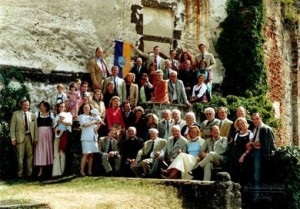 Willkommen beim Clan Batthyany |
Tags: Alexander Batthyany, Batthyany Clan, Batthyany Webseite, Einwohner von Rechnitz, Heini Thyssen, Margit Batthyany, Massaker von Rechnitz, Sacha Batthyany, Thyssen Familie
Posted in The Thyssen Art Macabre, Thyssen Family Comments Off on Seven Days With The Batthyanys
|